


Page 14 - EJMO-9-1
P. 14
Eurasian Journal of Medicine and
            Oncology
                                                                             Single-cell RNA-seq in malignant skin tumors


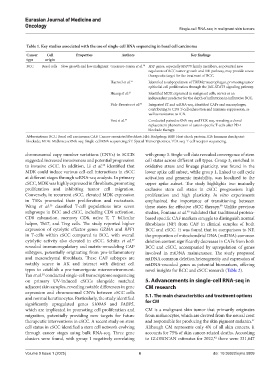
            Table 1. Key studies associated with the use of single‑cell RNA sequencing in basal cell carcinoma
            Cancer   Cell        Properties          Authors                      Key findings
            type    origin
            BCC    Basal cells  Slow growth and low malignant Guerrero-Juarez et al. 20  HSP genes, especially HSP70 family members, as potential new
                                                                regulators of BCC tumor growth and HH pathway, may provide a new
                                                                therapeutic target for the treatment of BCC.
                                                Haensel et al. 21  Identified a subpopulation of TREM2 macrophages, promoting tumor
                                                                                        +
                                                                epithelial cell proliferation through the JAK-STAT3 signaling pathway.
                                                Huang et al. 23  Identified MDK expressed in malignant cells, serves as an
                                                                independent predictor for the depth of infiltration in infiltrative BCC.
                                                Pich-Bavastro et al. 24  Integrated ST and scRNA-seq, identified CAFs and macrophages,
                                                                contributing to CD8 T-cell exhaustion and immune suppression, as
                                                                well as resistance to ICB.
                                                Yost et al. 25  Conducted paired scRNA-seq and TCR-seq, revealing a clonal
                                                                replacement phenomenon of tumor-specific T-cells after PD-1
                                                                blockade therapy.
            Abbreviations: BCC: Basal cell carcinoma; CAF: Cancer-associated fibroblast; HH: Hedgehog; HSP: Heat shock protein; ICB: Immune checkpoint
            blockade; MDK: Midkine; scRNA-seq: Single-cell RNA sequencing; ST: Spatial Transcriptomics; TCR-seq: T-cell receptor sequencing.

            chromosomal copy number variations (CNVs) in SCCIS   with group 3. Single-cell data revealed convergence of stem
            suggested increased invasiveness and potential progression   cell states across different cell types. Group 3, enriched in
            to invasive cSCC. In addition, Li et al.  identified that   oxidative stress and lineage plasticity, was found in the
                                             35
            MDK could induce various cell-cell interactions in cSCC   lower spike cell subset, while group 1, linked to cell cycle
            at different stages through scRNA-seq analysis. In primary   activation and genomic instability, was localized to the
            cSCC, MDK was highly expressed in fibroblasts, promoting   upper spike subset. The study highlights two mutually
            proliferation  and  inhibiting  tumor  cell  migration.   exclusive  stem  cell  states  in  cSCC  progression:  high
            Conversely, in recurrent cSCC, elevated MDK expression   proliferation and  high plasticity.  In vitro  experiments
            in TSKs promoted their proliferation and metastasis.   emphasized the importance of transitioning between
            Wang et al.  classified T-cell populations into seven   these states for effective cSCC therapy.  Unlike previous
                      36
                                                                                               39
            subgroups in BCC and cSCC, including CD8 activation,   studies, Fontana et al.  validated that traditional protein-
                                                                                40
            CD8  exhaustion,  memory  CD8,  naïve  T,  T  follicular   based specific CAF markers struggle to distinguish normal
            helper, Th17, and Treg cells. The study reported higher   fibroblasts (NF) from CAF in clinical samples of both
            expression of cytolytic effector genes  GZMA  and  RPF1   BCC and cSCC. It was found that in comparison to NF,
            in T-cells within cSCC compared to BCC, with overall   the proportion of mitochondrial DNA (mtDNA) common
            cytolytic activity also elevated in cSCC. Schütz et al.    deletion content significantly decreases in CAFs from both
                                                         37
            revealed immunoregulatory and matrix-remodeling CAF   BCC  and  cSCC,  accompanied  by  upregulation  of  genes
            subtypes, potentially originating from pro-inflammatory   involved in mtDNA maintenance. The study proposed
            and mesenchymal fibroblasts. These CAF subtypes are   mtDNA common deletion heterogeneity and expression of
            notably scarce in AK and interact with distinct cell   mtDNA-encoded genes as potential biomarkers, offering
            types to establish a pro-tumorigenic microenvironment.   novel insights for BCC and cSCC research (Table 2).
            Yan et al.  conducted single-cell transcriptome sequencing
                   38
            on primary UV-induced cSCCs alongside matched      5. Advancements in single-cell RNA-seq in
            adjacent skin samples, revealing notable differences in gene   CM research
            expression and chromosomal CNVs between cSCC cells
            and normal keratinocytes. Particularly, the study identified   5.1. The main characteristics and treatment options
            significantly upregulated genes  S100A9 and  FABP5,   for CM
            which are implicated in promoting cell proliferation and   CM is a malignant skin tumor that primarily originates
            migration, potentially  providing  new targets  for  future   from melanocytes, which are derived from the neural crest
            therapeutic interventions in cSCC. A recent study on stem   and responsible for producing the skin pigment melanin.
                                                                                                            41
            cell status in cSCC identified a stem cell network evolving   Although CM represents only 4% of all skin cancers, it
            through cancer stages using bulk RNA-seq. Three gene   accounts for 75% of skin cancer-related deaths. According
            clusters  were  found,  with  group  1  negatively  correlating   to GLOBOCAN estimates for 2022,  there were 331,647
                                                                                            42

            Volume 9 Issue 1 (2025)                         6                               doi: 10.36922/ejmo.5809

