


Page 12 - EJMO-9-1
P. 12
Eurasian Journal of Medicine and
            Oncology
                                                                             Single-cell RNA-seq in malignant skin tumors


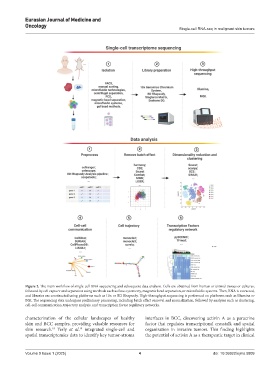
            Figure 2. The main workflow of single-cell RNA sequencing and subsequent data analysis. Cells are obtained from human or animal tissues or cultures,
            followed by cell capture and separation using methods such as flow cytometry, magnetic bead separation, or microfluidic systems. Then, RNA is extracted,
            and libraries are constructed using platforms such as 10× or BD Rhapsody. High-throughput sequencing is performed on platforms such as Illumina or
            BGI. The sequencing data undergoes preliminary processing, including batch effect removal and normalization, followed by analyses such as clustering,
            cell-cell communication, trajectory analysis, and transcription factor regulatory networks.


            characterization of  the  cellular  landscapes of  healthy   interfaces in BCC, discovering activin A as a paracrine
            skin and BCC samples, providing valuable resources for   factor that regulates transcriptional crosstalk and spatial
            skin research.  Yerly et al.  integrated single-cell and   organization in  invasive tumors.  This finding highlights
                       18
                                   19
            spatial transcriptomics data to identify key tumor-stroma   the potential of activin A as a therapeutic target in clinical

            Volume 9 Issue 1 (2025)                         4                               doi: 10.36922/ejmo.5809

