


Page 15 - EJMO-9-1
P. 15
Eurasian Journal of Medicine and
            Oncology
                                                                             Single-cell RNA-seq in malignant skin tumors


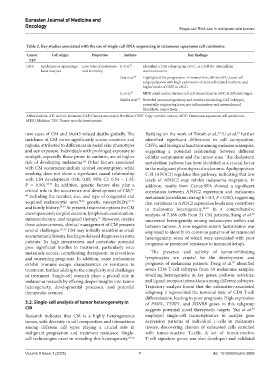
            Table 2. Key studies associated with the use of single‑cell RNA sequencing in cutaneous squamous cell carcinoma
            Cancer     Cell origin      Properties    Authors                    Key findings
             type
            cSCC   Epidermis or appendage   Low rates of metastasis  Ji et al. 33  Identified a TSK subgroup in cSCC, as a hub for intercellular
                   keratinocytes    and mortality             communication.
                                                    Zou et al. 34  Highlighted the progression of normal skin, AK to cSCC, basal cell
                                                              subpopulations with high expression of stem cell-related markers, and
                                                              higher levels of CNV in cSCC.
                                                    Li et al. 35  MDK could induce various cell-cell interactions in cSCC at different stages.
                                                    Schütz et al. 37  Revealed immunoregulatory and matrix-remodeling CAF subtypes,
                                                              potentially originating from pro-inflammatory and mesenchymal
                                                              fibroblasts, respectively.
            Abbreviations: AK: Actinic keratosis; CAF: Cancer-associated fibroblast; CNV: Copy number variant; cSCC: Cutaneous squamous cell carcinoma;
            MDK: Midkine; TSK: Tumor-specific keratinocyte.


            new cases of CM and 58,645 related deaths globally. The   Building on the work of Tirosh et al.,  Li et al.  further
                                                                                              63
                                                                                                      64
            incidence of CM varies significantly across countries and   identified significant differences in cell composition,
            regions, attributed to differences in racial skin phenotypes   CNVs, and biological functions among melanoma samples,
            and sun exposure. Individuals with prolonged exposure to   suggesting a potential relationship between different
            sunlight, especially those prone to sunburn, are at higher   cellular components and the tumor state. The cholesterol
            risk of developing melanoma.  Other factors associated   metabolism pathway has been identified as a crucial factor
                                    43
            with CM occurrence include alcohol consumption, while   in the malignant phenotypes of melanoma. Apolipoprotein
            smoking does not show a significant causal relationship   C-II (APOC2) regulates this pathway, indicating that low
            with  CM  development  (OR:  0.85;  95%  CI:  0.54  –  1.35;   levels of APOC2 may inhibit  melanoma migration. In
            P = 0.50). 44,45  In addition, genetic factors also play a   addition, results from CancerSEA showed a significant
            critical role in the occurrence and development of CM, 46-  correlation between APOC2 expression and melanoma
            48  including the number, size, and type of congenital and   metastasis (correlation strength > 0.3, P < 0.01), suggesting
            acquired melanocytic nevi, 49,50  genetic susceptibility, 51-53    that variations in APOC2 expression levels may contribute
            and family history. 53,54  At present, treatment options for CM   to melanoma heterogeneity. 64,65  In a comprehensive
            encompass early surgical excision, lymph node examination,   analysis of 7,186 cells from 31 CM patients, Kang et al.
                                                                                                            66
            immunotherapy, and targeted therapy.  However, despite   uncovered heterogeneity among melanocytes within and
                                           55
            these advancements, clinical management of CM presents   between tumors. A non-negative matrix factorization was
            several challenges. 56-59  CM may initially manifest as small   employed to identify six common patterns of intratumoral
            asymptomatic lesions, leading to delayed diagnoses in some   heterogeneity, some of which were associated with poor
            patients. Its  high  invasiveness  and  metastatic  potential   prognosis or promoted resistance to immunotherapy.
            pose significant hurdles to treatment, particularly once
            metastasis occurs, complicating therapeutic interventions   The presence and activity of tumor-infiltrating
            and worsening prognosis. In addition, some melanomas   lymphocytes are  crucial  for  the  development  and
                                                                                                    67
            exhibit  immune  escape  characteristics or  resistance  to   prognosis of melanoma patients. Deng et al.  identified
            treatment, further adding to the complexity and challenges   seven  CD8  T-cell  subtypes  from  59  melanoma  samples,
            of treatment. Single-cell research plays a pivotal role in   revealing heterogeneity in key genes, pathway activities,
            melanoma research by offering deeper insights into tumor   and ligand-receptor interactions among different subtypes.
            heterogeneity, developmental processes, and potential   Trajectory analysis found that the exhaustion-associated
            therapeutic avenues.                               subgroup 2 represented the terminal state of CD8 T-cell
                                                               differentiation, leading to poor prognosis. High expression
            5.2. Single-cell analysis of tumor heterogeneity in   of  PMEL,  TYRP1, and  EDNRB genes in this subgroup
            CM                                                 suggests potential novel  therapeutic targets.  Yan et al.
                                                                                                            68
            Research indicates that CM is a highly heterogeneous   employed single-cell transcriptomics to analyze gene
            tumor, with diversity in cell composition and interactions   expression patterns of individual T-cells in melanoma
            among different cell types playing a crucial role in   tissues, discovering clusters of exhausted cells enriched
            malignant progression and treatment resistance. Single-  with tumor-reactive T-cells. A  set of tumor-reactive
            cell technologies excel in revealing this heterogeneity. 60-62    T-cell signature genes was also developed and validated


            Volume 9 Issue 1 (2025)                         7                               doi: 10.36922/ejmo.5809

