


Page 162 - EJMO-9-1
P. 162
Eurasian Journal of Medicine and
            Oncology
                                                                               Potential of flavonoids against glioblastoma


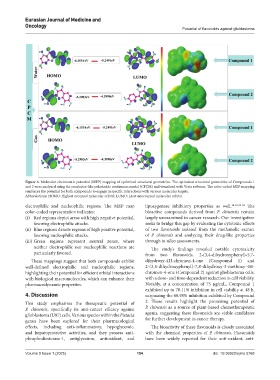
            Figure 4. Molecular electrostatic potential (MEP) mapping of optimized structural geometries. The optimized structural geometries of Compounds 1
            and 2 were analyzed using the conductor-like polarizable continuum model (CPCM) and visualized with Vesta software. The color-coded MEP mapping
            reinforces the potential for both compounds to engage in specific interactions with various molecular targets.
            Abbreviations: HOMO: Highest occupied molecular orbital; LUMO: Least unoccupied molecular orbital.

            electrophilic and nucleophilic regions. The MEP map   lipoxygenase inhibitory properties as well. 14-16,32-34  The
            color-coded representation indicates:              bioactive compounds derived from  P. chinensis remain
            (i)  Red regions depict areas with high negative potential,   largely unexamined in cancer research. Our investigation
               favoring electrophilic attacks.                 seeks to bridge this gap by evaluating the cytotoxic effects
            (ii)  Blue regions denote regions of high positive potential,   of two flavonoids isolated from the methanolic extract
               favoring nucleophilic attacks.                  of  P.  chinensis and analyzing their drug-like properties
            (iii) Green regions represent neutral zones, where   through in silico assessments.
               neither electrophilic nor nucleophilic reactions are   The  study’s  findings  revealed  notable  cytotoxicity
               particularly favored.                           from two flavonoids, 2-(3,4-dihydroxyphenyl)-5,7-
              These mappings suggest that both compounds exhibit   dihydroxy-4H-chromen-4-one (Compound 1) and
            well-defined electrophilic and nucleophilic regions,   2-(3,4-dihydroxyphenyl)-7,8-dihydroxy-3-methoxy-4H-
            highlighting their potential for efficient orbital interactions   chromen-4-one (Compound 2) against glioblastoma cells,
            with biological macromolecules, which can enhance their   with a dose- and time-dependent reduction in cell viability.
            pharmacodynamic properties.                        Notably, at a concentration of 75  µg/mL, Compound 1
                                                               exhibited up to 70.11% inhibition in cell viability at 48 h,
            4. Discussion                                      surpassing the 68.98% inhibition exhibited by Compound

            This study emphasizes the therapeutic potential of   2. These results highlight the promising potential of
            P.  chinensis, specifically its anti-cancer efficacy against   P. chinensis as a source of plant-based chemotherapeutic
            glioblastoma (U87) cells. Various species within the Pistacia   agents, suggesting these flavonoids are viable candidates
            genus have been explored for their pharmacological   for further development in cancer therapy.
            effects,  including  anti-inflammatory,  hypoglycemic,   The bioactivity of these flavonoids is closely associated
            and hepatoprotective activities, and they possess anti-  with the chemical properties of  P. chinensis. Flavonoids
            phosphodiesterase-1, antiglycation, antioxidant, and   have been widely reported for their anti-oxidant, anti-


            Volume 9 Issue 1 (2025)                        154                              doi: 10.36922/ejmo.5768

