


Page 188 - EJMO-9-1
P. 188
Eurasian Journal of Medicine and
            Oncology
                                                                                Research on hypoxia and ECM in cancer


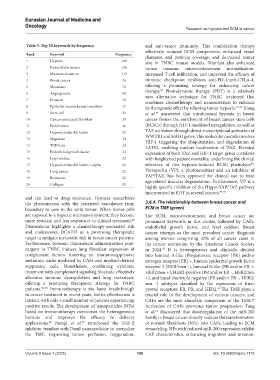
            Table 5. Top 20 keywords by frequency              and anti-tumor immunity. This combination therapy
                                                               effectively reduced ECM components, enhanced vessel
            Rank      Keyword                     Frequency    diameter, and pericyte coverage, and decreased tumor
            1         Hypoxia                        168       size in TNBC mouse models. Tranilast also enhanced
            2         Extracellular matrix           136       tumor  immune    microenvironment  normalization,
            3         Microenvironment               113       increased T-cell infiltration, and improved the efficacy of
            4         Breast cancer                  76        immune checkpoint inhibitors anti-PD-1/anti-CTLA-4,
            5         Metastasis                     72        offering a promising strategy for enhancing cancer
                                                                     50
            6         Angiogenesis                   58        therapy.  Photodynamic therapy (PDT) is a relatively
                                                               new alternative technique for TNBC treatment that
            7         Invasion                       49        combines chemotherapy and nanomaterials to enhance
            8         Epithelial-mesenchymal transition  47    its therapeutic effect by relieving tumor hypoxia. 51-53  Xiang
            9         Stem-cell                      31        et  al.  uncovered that intratumoral hypoxia in breast
                                                                   54
            10        Cancer-associated fibroblast   29        cancer fosters the enrichment of breast cancer stem cells
            11        Proliferation                  26        (BCSCs) through HIF-1-mediated upregulation, as well as
            12        Hypoxia-inducible factor       25        TAZ activation through direct transcriptional activation of
            13        Migration                      24        WWTR1 and SIAH1 genes. This molecular cascade involves
                                                               HIF-1 triggering the ubiquitination and degradation of
            14        TGF-beta                       24        LATS2, enabling nuclear localization of TAZ. Elevated
            15        Endothelial growth-factor      23        expression of both TAZ and HIF-1 target genes correlates
            16        Lysyl oxidase                  23        with heightened patient mortality, underlining the clinical
                                                                                                            54
            17        Hypoxia-inducible factor-1-alpha  22     relevance  of  this  hypoxia-induced  BCSC  phenotype .
            18        Lung cancer                    22        Verteporfin  (VP),  a  photosensitizer  and  an  inhibitor  of
            19        Resistance                     22        YAP/TAZ, has been approved for clinical use to treat
            20        Collagen                       21        age-related macular degeneration. Furthermore, VP is a
                                                               highly specific inhibitor of the Hippo-YAP/TAZ pathway
                                                               incorporated in PDT in several cancers. 55-57
            and can lead to drug resistance. Hypoxia exacerbates
            the phenomenon with the restricted vasculature from   3.6.4. The relationship between breast cancer and
            boundary  to  core  in  the  solid  tumor.  When  tumor  cells   ECM in TME (green)
            are exposed to a hypoxic microenvironment, they become   The ECM, microenvironment, and breast cancer are
            more resistant and less responsive to clinical treatment.    prominent keywords in this cluster, followed by CAFs,
                                                         46
            Doxorubicin highlights a chemotherapy-associated risk   endothelial growth factor, and lysyl oxidase. Breast
            and underscores DCAF13 as a promising therapeutic   cancer emerges as the most prevalent cancer diagnosis
            target to mitigate metastatic risk in breast cancer patients.   among women comprising 32% of all cancer cases in
            Furthermore, systemic doxorubicin administration post-  the cancer estimation by the American Cancer Society
            surgery in TNBC induces lung fibroblast expression of   in 2024.  It is heterogeneous and clinically divided
                                                                      58
            complement factors, fostering an immunosuppressive   into luminal A-like (Progesterone receptor [PR] and/or
            metastatic niche mediated by CAFs and myeloid-derived   estrogen receptor [ER] +, human epidermal growth factor
            suppressor cells. Nonetheless, combining cytotoxic   receptor 2 [HER /neu -), luminal B-like (PR and/or ER +,
                                                                            2
            treatment with complement signaling blockade effectively   HER2/neu +), HER2-positive (PR and/or ER -, HER2/neu
            alleviates  immune  dysregulation  and  lung  metastasis,   +), and basal-like/triple negative (PR and/or ER -, HER2/
            offering a promising therapeutic strategy for TNBC   neu  -) subtypes classified by the expression of three
            patients. 46-48  Immunotherapy is the latest breakthrough   pivotal receptors: ER, PR, and HER2.  The TME plays a
                                                                                             59
            in cancer treatment in recent years, but its effectiveness is   crucial role in the development of various cancers, and
            limited, with only a small number of patients experiencing   CAFs are the most abundant component of the TME.
                                                                                                            60
            positive results. The development of nanoparticles (NPs)   Activation of CAFs promotes tumor progression. Tang
            based on immunotherapy overcomes the heterogeneous   et al.  discovered that downregulation of the miR-200
                                                                   61
            barriers and improves the efficacy in delivery     family in breast cancer directly induces the transformation
            applications.  Panagi  et al.  repurposed the TGF-β   of normal fibroblasts (NFs) into CAFs, leading to ECM
                      49
                                    50
            inhibitor tranilast with Doxil nanomedicine to normalize   remodeling. NFs with reduced miR-200 expression exhibit
            the TME, improving tumor perfusion, oxygenation,   CAF characteristics, enhancing migration and invasion,


            Volume 9 Issue 1 (2025)                        180                              doi: 10.36922/ejmo.7116

