


Page 208 - EJMO-9-1
P. 208
Eurasian Journal of Medicine and
            Oncology
                                                                 Cost-effectiveness of nivolumab+chemo for gastric/GEJ cancer


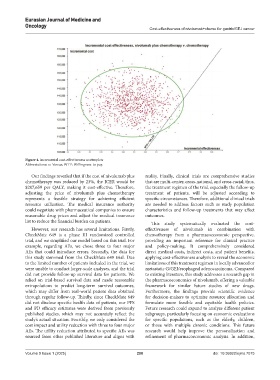
            Figure 4. Incremental cost-effectiveness scatterplots
            Abbreviations: v.: Versus; WTP: Willingness-to-pay.

              Our findings revealed that if the cost of nivolumab plus   reality. Finally, clinical trials are comprehensive studies
            chemotherapy was reduced by 23%, the ICER would be   that are multi-center, cross-national, and cross-racial; thus,
            $207,659 per QALY, making it cost-effective. Therefore,   the treatment regimen of the trial, especially the follow-up
            adjusting the price of nivolumab plus chemotherapy   treatment of patients, will be adjusted according to
            represents a feasible strategy for achieving efficient   specific circumstances. Therefore, additional clinical trials
            resource utilization. The medical insurance authority   are needed to address factors such as study population
            could negotiate with pharmaceutical companies to ensure   characteristics and follow-up treatments that may affect
            reasonable drug prices and adjust the medical insurance   outcomes.
            list to reduce the financial burden on patients.     This study systematically evaluated the cost-
              However, our research has several limitations. Firstly,   effectiveness of nivolumab in combination with
            CheckMate 649 is a phase III randomized controlled   chemotherapy from a pharmacoeconomic perspective,
            trial, and we simplified our model based on this trial. For   providing an important reference for clinical practice
            example, regarding AEs, we chose three to four major   and policy-making. It comprehensively considered
            AEs that could introduce errors. Secondly, the data for   direct medical costs, indirect costs, and patient benefits,
            this  study stemmed  from  the CheckMate  649  trial.  Due   applying cost-effectiveness analysis to reveal the economic
            to the limited number of patients included in the trial, we   limitations of this treatment regimen in locally advanced or
            were unable to conduct larger-scale analyses, and the trial   metastatic G/GEJ/esophageal adenocarcinoma. Compared
            did not provide follow-up survival data for patients. We   to existing literature, this study addresses a research gap in
            relied  on  trial-based  survival  data  and  made  reasonable   the pharmacoeconomics of nivolumab, offering a valuable
            extrapolations to predict long-term survival outcomes,   framework for similar future studies of new drugs.
            which may differ from real-world patient data obtained   Furthermore,  the  findings  provide  scientific  evidence
            through regular follow-up. Thirdly, since CheckMate 649   for decision-makers to optimize resource allocation and
            did not disclose specific health data of patients, our PFS   formulate more  feasible  and equitable health policies.
            and PD efficacy estimates were derived from previously   Future research could expand to analyze different patient
            published studies, which may not accurately reflect the   subgroups, particularly focusing on economic evaluations
            study’s actual situation. Fourthly, we only considered the   for specific populations, such as the elderly, children,
            cost impact and utility reduction with three to four major   or those with multiple chronic conditions. This future
            AEs. The utility reduction attributed to specific AEs was   research would help improve the personalization and
            sourced  from  other  published  literature  and  aligns  with   refinement of pharmacoeconomic analysis. In addition,


            Volume 9 Issue 1 (2025)                        200                              doi: 10.36922/ejmo.7075

