


Page 87 - EJMO-9-1
P. 87
Eurasian Journal of Medicine and
            Oncology
                                                                                        T2D polymorphisms in Asians


            T2D due to the presence of specific SNPs (Figure 1). These   regulators such as paired box 6 and paired box 4 are unable
            include genes involved in insulin synthesis (Centaurin   to bind to the T2D-risk allele, resulting in higher promoter
            delta 2 [CENTD2] and PC2), enhanced insulin secretion   activity.  These findings suggest that the  CENTD2
                                                                     12
            (HMG20A and IGF2BP2), inhibition of insulin secretion   rs1552224 A allele may function similarly to the CENTD2
            (BCL11A), insulin packaging and storage (SLC30A8), and   rs11603334 C allele in increasing T2D risk, potentially by
            the regulation of pancreatic  β-cell function and activity   decreasing the production of proinsulin.
            (KCNJ11, KCNQ1, and TCF7L2).
                                                                 Proprotein  convertase  subtilisin/kexin  type   2
              Preproinsulin is a precursor molecule composed of   (PCSK2) plays a crucial role in converting proinsulin
            multiple segments and produced during insulin synthesis.   into mature insulin and transforming proglucagon into
            This molecule undergoes further processing into mature   glucagon. Clinical studies  have  shown that individuals
            insulin, which is then stored in secretory granules. CENTD2   with T2D exhibit higher PCSK2 activity in both α- and
            plays a critical role in insulin production by regulating   β-cells. In addition, an in vivo study using diabetic mice
            trafficking and actin cytoskeleton reorganization. Clinical   demonstrated a four-fold increase in PCSK2 expression.
                                                                                                            13
            studies have shown that the CENTD2 rs1552224 A allele is   Another SNP, the  PCSK2 rs2208203 C allele, has been
            associated with T2D, low insulin production, and reduced   associated with reduced insulin secretion.  Similarly, the
                                                                                                 14
            homeostasis  model  assessment  of  beta-cell  function   PCSK2 rs2021785 G allele may increase the risk of T2D
            (HOMA-B) levels.  Another SNP in the same gene, the   by upregulating PCSK2 expression, potentially leading to
                           11
            CENTD2 rs11603334 C allele, has been linked to higher   reduced insulin secretion.
            CENTD2 expression and lower proinsulin levels, both of
            which are associated with T2D. This allele demonstrates   High mobility group 20A (HMG20A) regulates insulin
            increased transcriptional activity, but transcriptional   expression by influencing key genes such as MAF BZIP


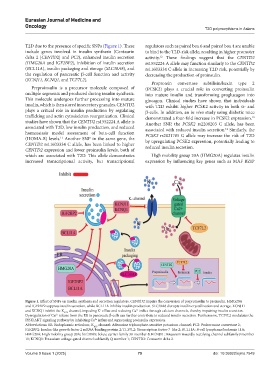
            Figure 1. Effect of SNPs on insulin synthesis and secretion regulators. CENTD2 impairs the conversion of preproinsulin to proinsulin. HMG20A
            and IGF2BP2 suppress insulin secretion, while BCL11A inhibits insulin production. SLC30A8 disrupts insulin crystallization and storage. KCNJ11
            and KCNQ1 inhibit the K ATP  channel, impeding K  efflux and reducing Ca  influx through calcium channels, thereby impairing insulin secretion.
                                                           2+
                                            +
            Dysregulation of Ca  release from the ER in pancreatic β-cells can further contribute to reduced insulin secretion. Furthermore, TCF7L2 modulates the
                         2+
            PI3K/AKT signaling pathway by inhibiting Ca  influx and suppressing proinsulin expression.
                                         2+
            Abbreviations: ER: Endoplasmic reticulum; K ATP  channel: Adenosine triphosphate-sensitive potassium channel; PC2: Prohormone convertase 2;
            IGF2BP2: Insulin-like growth factor 2 mRNA-binding protein 2; TCF7L2: Transcription factor-7–like 2; BCL11A: B-cell lymphoma/leukemia 11A;
            HMG20A: High mobility group 20A; SLC30A8: Solute carrier family 30-member 8; KCNJ11: Potassium inwardly rectifying channel subfamily J member
            11; KCNQ1: Potassium voltage-gated channel subfamily Q member 1; CENTD2: Centaurin delta 2.
            Volume 9 Issue 1 (2025)                         79                              doi: 10.36922/ejmo.7549

