


Page 92 - EJMO-9-1
P. 92
Eurasian Journal of Medicine and
            Oncology
                                                                                        T2D polymorphisms in Asians


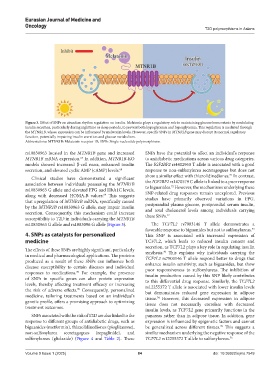
            Figure 3. Effect of SNPs on circadian rhythm regulation on insulin. Melatonin plays a regulatory role in maintaining glucose homeostasis by modulating
            insulin secretion, particularly during nighttime or sleep periods, to prevent both hypoglycemia and hyperglycemia. This regulation is mediated through
            the MTNR1B, whose expression can be influenced by melatonin levels. However, specific SNPs in MTNR1B gene may disrupt its normal regulatory
            function, potentially impairing insulin secretion and glucose metabolism.
            Abbreviations: MTNR1B: Melatonin receptor 1B; SNPs: Single nucleotide polymorphisms.

            rs10830963 located in the  MTNR1B gene and increased   SNPs have the potential to affect an individual’s response
                                   67
            MTNR1B mRNA expression.  In addition, MTNR1B-KO    to antidiabetic medications across various drug categories.
            models showed increased  β-cell mass, enhanced insulin   The IGF2BP2 rs4402960 T allele is associated with a good
            secretion, and elevated cyclic AMP (cAMP) levels. 68  response to non-sulfonylurea secretagogues but does not
                                                                                                   71
              Clinical  studies  have  demonstrated  a  significant   show a similar effect with thiazolidinediones.  In contrast,
            association between individuals possessing the MTNR1B   the IGF2BP2 rs1470579 C allele is linked to a poor response
                                                               to biguanides.  However, the mechanisms underlying these
                                                                          72
            rs10830963 G allele and elevated FPG and HbA1C levels,
            along  with  decreased  HOMA-B  values.   This  suggests   SNP-related drug responses remain unexplored. Previous
                                             69
            that upregulation of MTNR1B mRNA, specifically caused   studies have primarily observed variations in FPG,
            by the MTNR1B rs10830963 G allele, may impair insulin   postprandial plasma glucose, postprandial serum insulin,
                                                               and total  cholesterol levels among  individuals carrying
            secretion. Consequently, this mechanism could increase   these SNPs. 72
            susceptibility to T2D in individuals carrying the MTNR1B
            rs10830963 G allele and rs1083096 G allele (Figure 3).  The  TCF7L2  rs7903146  T allele  demonstrates  a
                                                               favorable response to biguanides but not to sulfonylureas.
                                                                                                            73
            4. SNPs as catalysts for personalized              This SNP is associated with increased expression of
            medicine                                           TCF7L2, which leads to reduced insulin content and
                                                               secretion, as TCF7L2 plays a key role in regulating insulin
            The effects of these SNPs are highly significant, particularly   synthesis.  This explains why individuals carrying the
                                                                       30
            in medical and pharmacological applications. The proteins   TCF7L2 rs7903146 T allele respond better to drugs that
            produced as a result of these SNPs can influence both   enhance insulin sensitivity, such as biguanides, but show
            disease susceptibility to certain diseases and individual   poor responsiveness to sulfonylureas. The inhibition of
            responses to medications.  For example, the presence   insulin production caused by this SNP likely contributes
                                  70
            of SNPs in specific genes can alter protein expression   to this differential drug response. Similarly, the  TCF7L2
            levels, thereby affecting treatment efficacy or increasing   rs12255372 T allele is associated with lower insulin levels
            the risk of adverse effects.  Consequently, personalized   but demonstrates reduced gene expression in adipose
                                  70
            medicine, tailoring treatments based on an individual’s   tissue.  However, this decreased expression in adipose
                                                                    74
            genetic profile, offers a promising approach to optimizing   tissue  does  not necessarily  correlate  with decreased
            treatment outcomes.                                insulin levels, as TCF7L2 gene primarily functions in the
              SNPs associated with the risk of T2D are also linked to the   pancreas rather than in adipose tissue. In addition, gene
            response to different groups of antidiabetic drugs, such as   expression is influenced by epigenetic factors and cannot
            biguanides (metformin), thiazolidinediones (pioglitazone),   be generalized across different tissues.  This suggests a
                                                                                               75
            non-sulfonylurea  secretagogues  (repaglinide),  and  similar mechanism underlying the negative response of the
            sulfonylureas (gliclazide) (Figure  4  and  Table 2). These   TCF7L2 rs12255372 T allele to sulfonylureas. 76


            Volume 9 Issue 1 (2025)                         84                              doi: 10.36922/ejmo.7549

