


Page 90 - EJMO-9-1
P. 90
Eurasian Journal of Medicine and
            Oncology
                                                                                        T2D polymorphisms in Asians


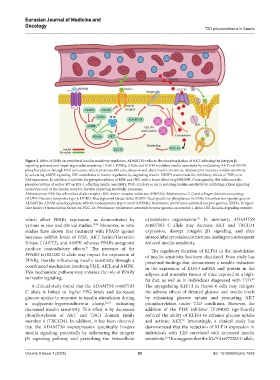
            Figure 2. Effect of SNPs on peripheral insulin sensitivity regulators. ADAMTS9 reduces the phosphorylation of AKT, affecting the integrin β1
            signaling pathway and impairing insulin sensitivity. DGKD, PPARγ, GAS6, and KLF14 modulate insulin sensitivity by modulating AKT and AMPK
            phosphorylation through PKC activation, which promotes IRS colocalization and alters insulin sensitivity. Adiponectin increases insulin sensitivity
            by activating AMPK signaling. IDE contributes to insulin regulation by degrading insulin. DUSP9 counteracts the inhibitory effects of TNF-α on
            FAS expression. In addition, it inhibits the phosphorylation of ERK and JNK, with a lesser effect on p38MAPK. Consequently, this influences the
            phosphorylation of serine 307 on IRS-1, affecting insulin sensitivity. PGC-1α plays a role in reducing insulin sensitivity by inhibiting critical signaling
            molecules such as the insulin receptor, thereby impacting metabolic processes.
            Abbreviations: FAS: Fas cell surface death receptor; IRS: Insulin receptor substrate; ADIPOQ: Adiponectin, C1Q and collagen domain containing;
            GLUT4: Glucose transporter type 4; DGKD: Diacylglycerol kinase delta; DUSP9: Dual specificity phosphatase 9; GAS6: Growth arrest-specific gene 6;
            ADAMTS9: ADAM metallopeptidase with thrombospondin type 1 motif 9; PPARγ: Peroxisome proliferator-activated receptor gamma; KLF14: Krüppel-
            Like family of transcription factor-14: PGC-1α: Peroxisome proliferator-activated receptor gamma coactivator 1-alpha; IDE: Insulin-degrading enzyme.


                                                                                     54
            which affect PPARγ expression, as demonstrated by   cytoskeleton organization.  In summary,  ADAMTS9
            various in vivo and clinical studies. 49,50  Moreover, in vitro   rs4607103 C allele may decrease AKT and TBC1D4
            studies have shown that treatment with PPARγ agonist   expression, disrupt integrin  β1 signaling, and alter
            increases mRNA levels of  PI3K,  AKT Serine/Threonine   intracellular cytoskeletal structures, leading to a subsequent
            Kinase 2 (AKT2), and AMPK, whereas PPARγ antagonist   reduced insulin sensitivity.
            produce contradictory effects.  The presence of the   The regulatory function of KLF14 in the modulation
                                      51
            PPARG rs1801282 G allele may impact the expression of   of insulin sensitivity has been elucidated. Prior study has
            PPARγ, thereby influencing insulin sensitivity through a   presented findings that demonstrate a notable reduction
            coordinated mechanism involving PI3K, AKT, and AMPK.   in the expression of  KLF14 mRNA and protein in the
            This mechanistic pathway may enhance the role of PPARγ   adipose and muscular tissues of mice exposed to a high-
            in insulin signaling.                              fat diet, as well as in individuals diagnosed with T2D.
                                                                                                            55
              A clinical study found that the ADAMTS9 rs4607103   The upregulating KLF14 in Hepa1-6  cells may mitigate
            C  allele  is  linked  to  higher  FPG  levels  and  decreased   the adverse effects of elevated glucose and insulin levels
            glucose uptake in response to insulin stimulation during   by enhancing glucose uptake and promoting AKT
            a euglycemic-hyperinsulinemia clamp, 52,53  indicating   phosphorylation under T2D conditions. However, the
            decreased  insulin  sensitivity.  This  effect  is  by  decreased   addition of the PI3K inhibitor LY294002 significantly
            phosphorylation  of AKT  and  TBC1  domain  family   reduced the ability of KLF14 to enhance glucose uptake
                                                                              55
            member 4 (TBC1D4). In addition, it has been observed   and activate AKT.  Interestingly, a clinical study has
            that the ADAMTS9 overexpression specifically hinders   demonstrated that the reduction of KLF14 expression in
            insulin  signaling, potentially  by influencing  the  integrin   individuals with T2D correlated with increased insulin
            β1 signaling pathway and perturbing the intracellular   sensitivity.  This suggests that the KLF14 rs972283 G allele,
                                                                       56

            Volume 9 Issue 1 (2025)                         82                              doi: 10.36922/ejmo.7549

