


Page 273 - EJMO-9-2
P. 273
Eurasian Journal of
            Medicine and Oncology                                       ANGPTL8 upregulation in CRC with liver metastasis


                       A                                     B


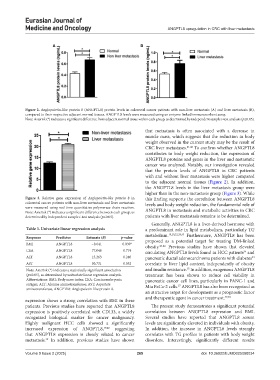
            Figure 2. Angiopoietin-like protein 8 (ANGPTL8) protein levels in colorectal cancer patients with non-liver metastasis (A) and liver metastasis (B),
            compared to their respective adjacent normal tissues. ANGPTL8 levels were measured using an enzyme-linked immunosorbent assay.
            Note: Asterisk (*) indicates a significant difference from adjacent normal tissue within each group, as determined by independent sample t-test analysis (p≤0.05).

                                                               that metastasis is often associated with a decrease in
                                                               muscle mass, which suggests that the reduction in body
                                                               weight observed in the current study may be the result of
                                                               CRC liver metastases. 41,42  To confirm whether ANGPTL8
                                                               contributes to body weight reduction, the expression of
                                                               ANGPTL8 proteins and genes in the liver and metastatic
                                                               cancer was analyzed. Notably, our investigation revealed
                                                               that the protein levels of ANGPTL8 in CRC patients
                                                               with and without liver metastasis were higher compared
                                                               to the adjacent normal tissues (Figure  2). In addition,
                                                               the  ANGPTL8  levels  in  the liver  metastasis  group were
                                                               higher than in the non-metastasis group (Figure 3). While
            Figure  3. Relative gene expression of  Angiopoietin-like protein 8 in   this finding supports the correlation between ANGPTL8
            colorectal cancer patients with non-liver metastasis and liver metastasis   levels and body weight reduction, the fundamental role of
            were measured using real-time quantitative polymerase chain reaction.   ANGPTL8 in metastasis and metabolic activities in CRC
            Note: Asterisk (*) indicates a significant difference between each group, as
            determined by independent sample t-test analysis (p≤0.05).  patients with liver metastasis remains to be determined.
                                                                 Generally, ANGPTL8 is a liver-derived hormone with
            Table 3. Univariate linear regression analysis     a predominant role in lipid metabolism, particularly TG
            Response     Predictor    Estimate (B)  p-value    metabolism. 19,20,22,29,43  Furthermore, ANGPTL8 has been
            BMI          ANGPTL8        −8.641       0.039*    proposed as a potential target for treating DM-linked
                                                                        Previous studies have shown that elevated
                                                               obesity.
                                                                     43-46
            CEA          ANGPTL8        77.048       0.774     circulating ANGPTL8 levels found in HCC patients  and
                                                                                                         34
            ALT          ANGPTL8        15.263       0.240     pancreatic ductal adenocarcinoma patients with diabetes
                                                                                                            44
            AST          ANGPTL8        50.731       0.052     correlate to liver lipid content, independently of obesity
                                                                                35
            Note: Asterisk (*) indicates a statistically significant association   and insulin resistance.  In addition, exogenous ANGPTL8
            (p≤0.05), as determined by univariate linear regression analysis.  treatment has been shown to reduce cell viability in
            Abbreviations: BMI: Body mass index; CEA: Carcinoembryonic   pancreatic cancer cell lines, particularly in PANC-1  and
            antigen; ALT: Alanine aminotransferase; AST: Aspartate   Mia PaCa-2 cells.  ANGPTL8 has also been recognized as
                                                                             37
            aminotransferase, ANGPTL8: Angiopoietin-like protein 8.
                                                               an attractive target for development as a prognostic factor
                                                               and therapeutic agent in cancer treatment. 47,48
            expression shows a strong correlation with BMI in these
            patients. Previous studies have reported that ANGPTL8   The present study demonstrates a significant potential
            expression is positively correlated with CD133, a widely   correlation  between  ANGPTL8  expression  and  BMI.
            recognized biological marker for cancer malignancy.   Several studies have reported that ANGPTL8 serum
            Highly  malignant HCC  cells  showed a  significantly   levels are significantly elevated in individuals with obesity.
            increased expression of ANGPTL8, 39,40  suggesting   In addition, the increase in ANGPTL8 levels strongly
            that ANGPTL8 expression is closely related to cancer   correlates with TG profiles in patients with body weight
            metastasis.  In addition, previous studies have shown   disorders. Interestingly, significantly different results
                    39
            Volume 9 Issue 2 (2025)                        265                         doi: 10.36922/EJMO025080034

