


Page 60 - EJMO-9-2
P. 60
Eurasian Journal of
            Medicine and Oncology                                    TCM regulates gut microbiota in pediatric MP pneumonia


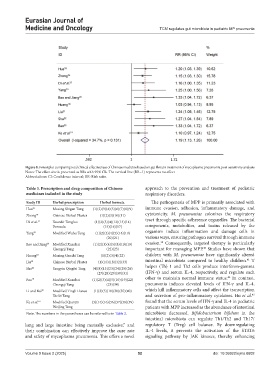
            Figure 8. Forest plot comparing total clinical effectiveness of Chinese medicine based on gut flora in treatment of mycoplasma pneumonia post-sensitivity analysis
            Notes: The effect size is presented as RRs with 95% CIs. The vertical line (RR=1) represents no effect
            Abbreviations: CI: Confidence interval; RR: Risk ratio.

            Table 3. Prescription and drug composition of Chinese   approach to the prevention and treatment of pediatric
            medicines included in the study                    respiratory disorders.
            Study ID   Herbal prescription  Herbal formula       The pathogenesis of MPP is primarily associated with
            Hua 28     Maxing Shigan Tang  (1)(2)(3)(4)(5)(6)(7)(8)(9)  immune evasion, adhesion, inflammatory damage, and
            Zhong 24   Chinese Herbal Plaster  (1)(2)(3)(10)(11)  cytotoxicity.  M. pneumoniae colonizes the respiratory
            Di et al. 27  Xuanfei Tongluo   (1)(2)(3)(4)(12)(13)(14)  tract through specific adherence organelles. The bacterial
                       Formula               (15)(16)(17)      components, metabolites, and toxins released by the
            Yang 23    Modified Wuhu Tang  (1)(2)(3)(4)(5)(18)(19)  organism  induce  inflammation  and  damage  cells  in
                                              (20)(21)         various ways, ensuring pathogen survival through immune
                                                                     39
            Bao and Jiang 26  Modified Xuanbai   (1)(2)(3)(4)(5)(8)(10)(19)  evasion.  Consequently, targeted therapy is particularly
                                                                                        40
                       Chengqi Tang           (22)(23)         important for managing MPP.  Studies have shown that
            Huang 18   Maxing Ganshi Tang   (1)(2)(3)(4)(22)   children with  M. pneumoniae have significantly altered
                                                                                                          41
            Liu 21     Chinese Herbal Plaster  (1)(10)(18)(32)(33)  intestinal microbiota compared to healthy children.  T
            Sha 22     Yangyin Qingfei Tang  (4)(8)(13)(23)(24)(25)(26)  helper (Th) 1 and Th2  cells produce interferon-gamma
                                          (27)(28)(29)(30)(31)  (IFN-γ) and serum IL-4, respectively, and regulate each
                                                                                                  42
            Bao 25     Modified Xuanbai   (1)(2)(3)(4)(5)(10)(19)(22)  other to maintain normal immune status.  In contrast,
                       Chengqi Tang           (23)(34)         pneumonia  induces  elevated  levels  of  IFN-γ  and  IL-4,
            Li and Bai 20  Modified Tingli Dazao   (1)(3)(5)(10)(30)(35)(40)  which kill inflammatory cells and affect the transcription
                       Xiefei Tang                             and secretion of pro-inflammatory cytokines. Hu et al. 43
            Ke et al. 19  Modified Qianjin   (3)(14)(16)(36)(37)(38)(39)  found that the serum levels of IFN-γ and IL-4 in pediatric
                       Weijing Tang                            patients with MPP increased as the abundance of intestinal
            Note: The numbers in the parentheses can be referred to in Table 2.  microbiota decreased.  Bifidobacterium bifidum in the
                                                               intestinal microbiota can regulate Th1/Th2 and Th17/
            lung  and  large  intestine  being  mutually  exclusive,”  and   regulatory T (Treg) cell balance. By downregulating
            their combination can effectively improve the cure rate   IL-4 levels, it prevents the activation of the STAT6
            and safety of mycoplasma pneumonia. This offers a novel   signaling pathway by JAK kinases, thereby enhancing


            Volume 9 Issue 2 (2025)                         52                              doi: 10.36922/ejmo.8602

