


Page 59 - EJMO-9-2
P. 59
Eurasian Journal of
            Medicine and Oncology                                    TCM regulates gut microbiota in pediatric MP pneumonia


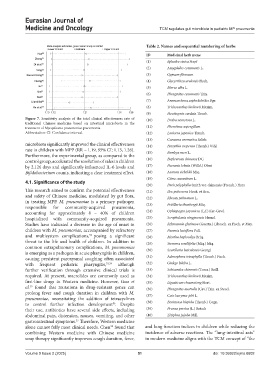
                                                               Table 2. Names and sequential numbering of herbs
                                                               ID       Medicinal herb name
                                                               (1)      Ephedra sinica Stapf
                                                               (2)      Amygdalus communis L.
                                                               (3)      Gypsum fibrosum
                                                               (4)      Glycyrrhiza uralensis Fisch.
                                                               (5)      Morus alba L.
                                                               (6)      Phragmites communis Trin.
                                                               (7)      Anemarrhena asphodeloides Bge.
                                                               (8)      Trichosanthes kirilowii Maxim.
                                                               (9)      Houttuynia cordata Thunb.
            Figure  7. Sensitivity analysis of the total clinical effectiveness rate of   (10)  Draba nemorosa L.
            traditional Chinese medicine based on intestinal microbiota in the
            treatment of Mycoplasma pneumoniae pneumonia       (11)     Pheretima aspergillum
            Abbreviation: CI: Confidence interval.             (12)     Lonicera japonica Thunb.
                                                               (13)     Curcuma aromatica Salisb.
            microbiota significantly improved the clinical effectiveness   (14)  Forsythia suspensa (Thunb.) Vahl
            rate in children with MPP (RR = 1.19, 95% CI: 1.13, 1.26).   (15)  Bombyx mori L.
            Furthermore, the experimental group, as compared to the
            control group, accelerated the resolution of rales in children   (16)  Bupleurum chinense DC.
            by 2.126 days and significantly influenced IL-6 levels and   (17)  Pueraria lobata (Willd.) Ohwi
            Bifidobacterium counts, indicating a clear treatment effect.  (18)  Asarum sieboldii Miq.
                                                               (19)     Citrus aurantium L.
            4.1. Significance of the study
                                                               (20)     Paris polyphylla Smith var. chinensis (Franch.) Hara
            This research aimed to confirm the potential effectiveness   (21)  Ilex pubescens Hook. et Arn.
            and safety of Chinese medicine, modulated by gut flora,   (22)  Rheum palmatum L.
            in treating MPP.  M. pneumoniae is a primary pathogen   (23)  Fritillaria thunbergii Miq.
            responsible  for  community-acquired  pneumonia,
            accounting  for approximately 8 –  40% of children   (24)   Ophiopogon japonicus (L.f.) Ker-Gawl.
            hospitalized with community-acquired pneumonia.    (25)     Scrophularia ningpoensis Hemsl.
            Studies have indicated a decrease in the age of onset in   (26)  Rehmannia glutinosa (Gaertn.) Libosch. ex Fisch. et Mey.
            children with M. pneumoniae, accompanied by refractory   (27)  Paeonia lactiflora Pall.
                                       32
            and multisystem complications, posing a significant   (28)  Mentha haplocalyx Briq.
            threat to the life and health of children. In addition to   (29)  Stemona sessilifolia (Miq.) Miq.
            common extrapulmonary complications, M. pneumoniae   (30)   Scutellaria baicalensis Georgi
            is emerging as a pathogen in acute pharyngitis in children,
            causing persistent paroxysmal coughing often associated   (31)  Adenophora tetraphylla (Thunb.) Fisch.
            with frequent pediatric pharyngitis, 33,34  although   (32)  Ginkgo biloba L.
            further verification through extensive clinical trials is   (33)  Schisandra chinensis (Turcz.) Baill.
            required. At present, macrolides are commonly used as   (34)  Trichosanthes kirilowii Maxim.
            first-line  drugs  in  Western  medicine.  However,  Guo  et   (35)  Ligusticum chuanxiong Hort.
            al.   found  that  mutations  in  drug-resistant  genes  can   (36)  Phragmites australis (Cav.) Trin. ex Steud.
              35
            prolong  fever  and  cough  duration  in  children  with  M.   (37)  Coix lacryma‑jobi L.
            pneumoniae, necessitating the addition of tetracyclines
            to control further infection development . Despite   (38)   Benincasa hispida (Thunb.) Cogn.
                                                 36
            their use, antibiotics have several side effects, including   (39)  Prunus persica (L.) Batsch
            abdominal pain, distension, nausea, vomiting, and other   (40)  Ziziphus jujuba Mill.
                                 37
            gastrointestinal symptoms.  Therefore, Western medicine
                                                38
            alone cannot fully meet clinical needs. Chen  found that   and lung function indices in children while reducing the
            combining Western medicine with Chinese medicine   incidence of adverse reactions. The “lung-intestinal axis”
            soup therapy significantly improves cough duration, fever,   in modern medicine aligns with the TCM concept of “the

            Volume 9 Issue 2 (2025)                         51                              doi: 10.36922/ejmo.8602

