


Page 61 - EJMO-9-2
P. 61
Eurasian Journal of
            Medicine and Oncology                                    TCM regulates gut microbiota in pediatric MP pneumonia


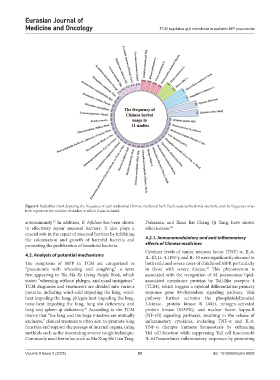
            Figure 9. Radial bar chart depicting the frequency of each traditional Chinese medicinal herb. Each study utilized only one herb, and the frequency of an
            herb represents the number of studies in which it was included.

            autoimmunity.  In addition, B. bifidum has been shown   Dabanxia, and Xuan Bai Cheng Qi Tang, have shown
                        32
            to effectively repair mucosal barriers. It also plays a   effectiveness. 40
            crucial role in the repair of mucosal barriers by inhibiting
            the colonization and growth of harmful bacteria and   4.2.1. Immunomodulatory and anti-inflammatory
            promoting the proliferation of beneficial bacteria.  effects of Chinese medicines
                                                               Cytokine  levels of tumor  necrosis  factor  (TNF)  α, IL-6,
            4.2. Analysis of potential mechanisms
                                                               IL-1β, IL-4, IFN-γ, and IL-10 were significantly elevated in
            The symptoms of MPP in TCM are categorized as      both mild and severe cases of childhood MPP, particularly
            “pneumonia  with  wheezing and coughing,”  a term   in those with severe disease.  This phenomenon is
                                                                                         45
            first appearing in The Ma Ke Living People Book, which   associated with the recognition of M. pneumoniae lipid-
            states: “wheezing without phlegm, and nasal instigators.”   associated membrane proteins by Toll-like  receptor  4
            TCM diagnoses and treatments are divided into various   (TLR4), which triggers a myeloid differentiation primary
            patterns, including wind-cold impeding the lung, wind-  response gene 88-dependent signaling pathway. This
            heat impeding the lung, phlegm-heat impeding the lung,   pathway further activates the phosphatidylinositol
            toxic-heat impeding the lung, lung yin deficiency, and   3-kinase-  protein  kinase  B  (Akt),  mitogen-activated
            lung and spleen qi deficiency.  According to the TCM   protein kinase (MAPK), and nuclear factor kappa-B
                                     44
            theory that “the lung and the large intestine are mutually   (NF-κB) signaling pathways, resulting in the release of
            exclusive,” clinical treatments often aim to promote lung   inflammatory cytokines, including TNF-α and IL-6.
            function and support the passage of internal organs, using   TNF-α  disrupts  immune  homeostasis  by  enhancing
            methods such as the descending reverse cough technique.   Th1 cell function while suppressing Th2 cell function.46
            Commonly used formulas, such as Ma Xing Shi Gan Tang,   IL-647exacerbates inflammatory responses by promoting


            Volume 9 Issue 2 (2025)                         53                              doi: 10.36922/ejmo.8602

