


Page 57 - EJMO-9-2
P. 57
Eurasian Journal of
            Medicine and Oncology                                    TCM regulates gut microbiota in pediatric MP pneumonia


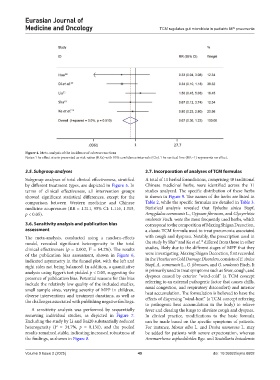
            Figure 4. Meta-analysis of the incidence of adverse reactions
            Notes: The effect size is presented as risk ratios (RRs) with 95% confidence intervals (CIs). The vertical line (RR=1) represents no effect.


            3.5. Subgroup analyses                             3.7. Incorporation of analyses of TCM formulas
            Subgroup analyses of total clinical effectiveness, stratified   A total of 11 herbal formulations, comprising 40 traditional
            by different treatment types, are depicted in Figure 5. In   Chinese medicinal herbs, were identified across the 11
            terms of clinical effectiveness, all intervention groups   studies  analyzed.  The  specific  distribution  of  these  herbs
            showed significant statistical differences, except for the   is shown in Figure 9. The names of the herbs are listed in
            comparison between Western medicine and Chinese    Table 2, while the specific formulas are detailed in Table 3.
            medicine acupressure (RR = 1.211, 95% CI: 1.116, 1.315,   Statistical analysis revealed that  Ephedra sinica  Stapf,
            p < 0.05).                                         Amygdalus communis L., Gypsum fibrosum, and Glycyrrhiza
                                                               uralensis Fisch. were the most frequently used herbs, which
            3.6. Sensitivity analysis and publication bias     correspond to the composition of Maxing Shigan Decoction,
            assessment                                         a classic TCM formula used to treat pneumonia associated
            The meta-analysis, conducted using a random-effects   with cough and dyspnea. Notably, the prescription used in
                                                                                      19
                                                                           22
            model, revealed significant heterogeneity in the total   the study by Sha  and Ke et al.  differed from those in other
            clinical effectiveness (p = 0.002, I  = 64.2%). The results   studies, likely due to the different stages of MPP that they
                                       2
            of the publication bias assessment, shown in  Figure  6,   were investigating. Maxing Shigan Decoction, first recorded
            indicated asymmetry in the funnel plot, with the left and   in the Treatise on Cold Damage Disorders, consists of E. sinica
            right sides not being balanced. In addition, a quantitative   Stapf, A. communis L., G. fibrosum, and G. uralensis Fisch. It
            analysis using Egger’s test yielded p < 0.05, suggesting the   is primarily used to treat symptoms such as fever, cough, and
            presence of publication bias. Potential reasons for this bias   dyspnea caused by exterior “wind-cold” (a TCM concept
            include the relatively low quality of the included studies,   referring to an external pathogenic factor that causes chills,
            small sample sizes, varying severity of MPP in children,   nasal congestion, and respiratory discomfort) and interior
            diverse interventions and treatment durations, as well as   heat accumulation. The formulation is believed to have the
                                                               effects of dispersing “wind-heat” (a TCM concept referring
            the challenges associated with publishing negative findings.
                                                               to pathogenic heat accumulation in the body) to relieve
              A sensitivity analysis was performed by sequentially   fever and clearing the lungs to alleviate cough and dyspnea.
            removing individual studies, as depicted in  Figure  7.   In clinical practice, modifications to the basic formula
            Excluding the study by Li and Bai20 substantially reduced   can be made based on the specific symptoms of patients.
            heterogeneity (I  = 34.7%,  p  = 0.131), and the pooled   For instance,  Morus alba L. and  Draba nemorosa L. may
                         2
            results remained stable, indicating increased robustness of   be added for patients with severe expectoration, whereas
            the findings, as shown in Figure 8.                Anemarrhena asphodeloides Bge. and Scutellaria baicalensis


            Volume 9 Issue 2 (2025)                         49                              doi: 10.36922/ejmo.8602

