


Page 238 - EJMO-9-3
P. 238
Eurasian Journal of
            Medicine and Oncology                                                 ICU pharmacists and clinical outcomes


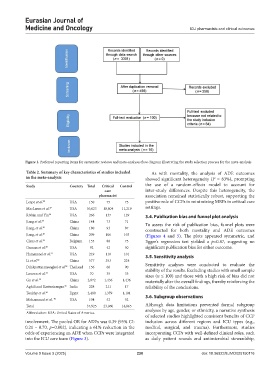
            Figure 1. Preferred reporting items for systematic reviews and meta-analyses flow diagram illustrating the study selection process for the meta-analysis

            Table 2. Summary of key characteristics of studies included   As with mortality, the analysis of ADE outcomes
            in the meta‑analysis                               showed significant heterogeneity (I  = 83%), prompting
                                                                                            2
            Study              Country  Total  Critical   Control  the use of a random-effects model to account for
                                              care             inter-study differences. Despite this heterogeneity, the
                                           pharmacist          association remained statistically robust, supporting the
            Leape et al. 25    USA     150    75      75       positive role of CCPs in minimizing MRPs in critical care
            MacLaren et al. 37  USA   30,023  18,804  11,219   settings.
            Rivkin and Yin 26  USA     266    137     129      3.4. Publication bias and funnel plot analysis
            Jiang et al. 27    China   144    73      71       To assess  the risk of publication bias, funnel plots  were
            Jiang, et al. 38   China   180    93      87       constructed for both mortality and ADE outcomes
            Jiang, et al. 28   China   209    106     103      (Figures  4 and  5). The plots appeared symmetric, and
            Claus et al. 29    Belgium  155   80      75       Egger’s regression test yielded a  p=0.87, suggesting no
            Oxman et al. 30    USA     92     42      50       significant publication bias for either outcome.
            Hammond et al. 31  USA     219    118     101      3.5. Sensitivity analysis
            Li et al. 32       China   577    353     224
            Dilokpattanamongkol et al. 39  Thailand  156  66  90  Sensitivity analyses were conducted to evaluate the
                                                               stability of the results. Excluding studies with small sample
            Louzon et al. 33   USA     70     35      35       sizes (n ≤ 100) and those with a high risk of bias did not
            Gu et al. 34       China  2,872  1,436   1,436     materially alter the overall findings, thereby reinforcing the
            Aghili and Kasturirangan 35  India  228  211  17   reliability of the conclusions.
            Toukhy et al. 36   Egypt  2,480  1,379   1,101
            Mohammad et al.  40  USA   104    52      52       3.6. Subgroup observations
            Total                     37,925  23,060  14,865   Although  data  limitations  prevented  formal  subgroup
            Abbreviation: USA: United States of America.       analyses by age, gender, or ethnicity, a narrative synthesis
                                                               of selected studies highlighted consistent benefits of CCP
            involvement. The pooled OR for ADEs was 0.39 (95% CI:   inclusion  across  different  regions  and  ICU  types  (e.g.,
            0.21 – 0.70, p=0.002), indicating a 61% reduction in the   medical,  surgical,  and  trauma).  Furthermore,  studies
            odds of experiencing an ADE when CCPs were integrated   incorporating CCPs with well-defined clinical roles, such
            into the ICU care team (Figure 3).                 as daily patient rounds and antimicrobial stewardship,


            Volume 9 Issue 3 (2025)                        230                         doi: 10.36922/EJMO025150116

