


Page 10 - ESAM-1-1
P. 10
Engineering Science in
            Additive Manufacturing                                        ML in MAM monitoring and control through images


            Optical             Industrial camera  A                        B


                                High-speed camera  C                        D


                                IR camera        E                          F


            X-ray                               G                           H


            Acoustic/ Spectral                   I                          J


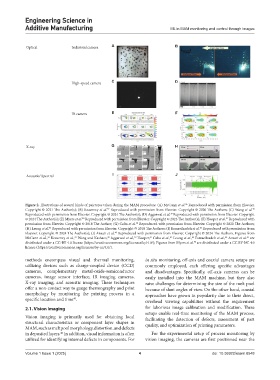
            Figure 2. Illustrations of several kinds of paictures taken during the MAM procedure. (A) McCann et al.  Reproduced with permission from Elsevier.
                                                                                36
            Copyright © 2021 The Author(s); (B) Keaveney et al.  Reproduced with permission from Elsevier. Copyright © 2020 The Authors; (C) Wang et al.
                                               37
                                                                                                            38
            Reproduced with permission from Elsevier. Copyright © 2024 The Author(s); (D) Aggarwal et al.  Reproduced with permission from Elsevier. Copyright
                                                                         39
            © 2024 The Author(s); (E) Myers et al.  Reproduced with permission from Elsevier. Copyright © 2023 The Author(s); (F) Hooper et al.  Reproduced with
                                    40
                                                                                                 41
            permission from Elsevier. Copyright © 2018 The Author; (G) Calta et al.  Reproduced with permission from Elsevier. Copyright © 2020 The Authors;
                                                           42
            (H) Leung et al.  Reproduced with permission from Elsevier. Copyright © 2018 The Authors; (I) Esmaeilzadeh et al.  Reproduced with permission from
                      43
                                                                                      44
            Elsevier. Copyright © 2024 The Author(s); (J) Ansari et al.  Reproduced with permission from Elsevier. Copyright © 2024 The Authors. Figures from
                                                  45
            McCann et al.,  Keaveney et al.,  Wang and Kashaev,  Aggarwal et al.,  Hooper,  Calta et al.,  Leung et al.,  Esmaeilzadeh et al.,  Ansari et al.  are
                                 37
                                                                                   43
                                                                                                 44
                                                                                                          45
                                                                         42
                                               38
                                                          39
                                                                 41
                     36
            distributed under a CC-BY 4.0 license (https://creativecommons.org/licenses/by/4.0/); Figures from Myers et al.  are distributed under a CC BY-NC 4.0
                                                                                   40
            license (https://creativecommons.org/licenses/by-nc/4.0/).
            methods encompass visual and thermal monitoring,   in situ monitoring, off-axis and coaxial camera setups are
            utilizing devices such as charge-coupled device (CCD)   commonly employed, each offering specific advantages
            cameras, complementary metal-oxide-semiconductor   and disadvantages. Specifically, off-axis cameras can be
            cameras, image sensor interface, IR imaging cameras,   easily installed into the MAM machine, but they also
            X-ray  imaging,  and acoustic imaging. These techniques   raise challenges for determining the size of the melt pool
            offer a non-contact way to gauge thermography and print   because of slant angles of view. On the other hand, coaxial
            morphology by monitoring the printing process in a   approaches have grown in popularity due to their direct,
            specific location and time .                       overhead viewing capabilities without the requirement
                                40
            2.1. Vision imaging                                for laborious image calibration and modification. These
                                                               setups enable real-time monitoring of the MAM process,
            Vision imaging is primarily used for obtaining local   facilitating the detection of defects, assessment of part
            structural characteristics or component layer shapes in   quality, and optimization of printing parameters.
            MAM, such as melt pool morphology, distortion, and defects
                           46
            in deposited layers.  In addition, visual information is often   For the experimental setup of process monitoring by
            utilized for identifying internal defects in components. For   vision imaging, the cameras are first positioned near the
            Volume 1 Issue 1 (2025)                         4                              doi: 10.36922/esam.8548

