


Page 44 - ESAM-1-1
P. 44
Engineering Science in
            Additive Manufacturing                                                   Gen-AI for lattice structure design


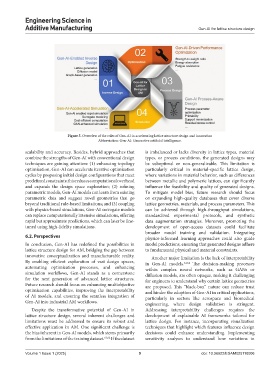
                              Figure 5. Overview of the roles of Gen-AI in accelerating lattice structure design and innovation
                                           Abbreviation: Gen-AI: Generative artificial intelligence.

            scalability and accuracy. Besides, hybrid approaches that   is imbalanced or lacks diversity in lattice types, material
            combine the strengths of Gen-AI with conventional design   types, or process conditions, the generated designs may
            techniques are gaining attention: (1) enhancing topology   be suboptimal or non-generalizable. This limitation is
            optimization, Gen-AI can accelerate iterative optimization   particularly critical in material-specific lattice design,
            cycles by proposing initial design configurations that meet   where variations in material behavior, such as differences
            predefined constraints; this reduces computational overhead   between metallic and polymeric lattices, can significantly
            and expands the design space exploration; (2) refining   influence the feasibility and quality of generated designs.
            parametric models, Gen-AI models can learn from existing   To mitigate model bias, future research should focus
            parametric  data  and  suggest  novel  geometries  that  go   on expanding high-quality databases  that  cover diverse
            beyond traditional rule-based limitations; and (3) coupling   lattice geometries, materials, and process parameters. This
            with physics-based simulations, Gen-AI surrogate models   can be achieved through high-throughput simulations,
            can replace computationally intensive simulations, offering   standardized experimental protocols,  and synthetic
            rapid but approximate predictions, which can later be fine-  data augmentation strategies. Moreover, promoting the
            tuned using high-fidelity simulations.             development of open-access datasets could facilitate
                                                               broader model training and validation. Integrating
            6.2. Perspectives                                  physics-informed learning approaches could also guide
            In  conclusion,  Gen-AI  has  redefined  the  possibilities  in   model predictions, ensuring that generated designs adhere
            lattice structure design for AM, bridging the gap between   to fundamental physical and material constraints.
            innovative  conceptualization and manufacturable reality.   Another major limitation is the lack of interpretability
            By enabling efficient exploration of vast design spaces,   in Gen-AI models. 63,64  The decision-making processes
            automating optimization processes, and enhancing   within complex neural networks, such as GANs or
            simulation workflows, Gen-AI stands as a cornerstone   diffusion models, are often opaque, making it challenging
            for the next generation of advanced lattice structures.   for engineers to understand why certain lattice geometries
            Future research should focus on enhancing multiobjective   are proposed. This “black-box” nature can reduce trust
            optimization capabilities, improving the interpretability   and hinder the adoption of Gen-AI in critical applications,
            of AI models, and ensuring the seamless integration of   particularly in sectors like aerospace and biomedical
            Gen-AI into industrial AM workflows.               engineering, where design validation is stringent.

              Despite the transformative potential of Gen-AI in   Addressing interpretability challenges requires the
            lattice structure design, several inherent challenges and   development of explainable AI frameworks tailored for
            limitations must be addressed to ensure its robust and   lattice design. For instance, incorporating visualization
            effective application in AM. One significant challenge is   techniques that highlight which features influence design
            the bias inherent in Gen-AI models, which stems primarily   decisions  could enhance  understanding. Implementing
            from the limitations of the training dataset. 61,62  If the dataset   sensitivity analyses to understand how variations in


            Volume 1 Issue 1 (2025)                         9                          doi: 10.36922/ESAM025110006

