


Page 41 - ESAM-1-1
P. 41
Engineering Science in
            Additive Manufacturing                                                   Gen-AI for lattice structure design


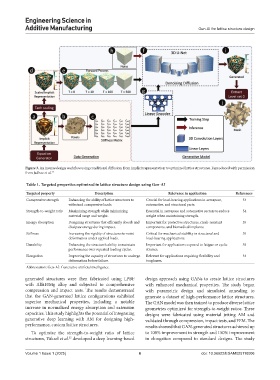
            Figure 3. An inverse design workflow using conditional diffusion: from implicit representation to optimized lattice structures. Reproduced with permission
            from Jadhav et al. 35

            Table 1. Targeted properties optimized in lattice structure design using Gen‑AI

            Targeted property            Description                     Relevance in application    References
            Compressive strength  Enhancing the ability of lattice structures to   Crucial for load-bearing applications in aerospace,   53
                              withstand compressive loads.     automotive, and structural parts.
            Strength-to-weight ratio  Maximizing strength while minimizing   Essential in aerospace and automotive sectors to reduce   54
                              material usage and weight.       weight when maintaining strength.
            Energy absorption  Designing structures that efficiently absorb and   Important for protective structures, crash-resistant   55
                              dissipate energy during impact.  components, and biomedical implants.
            Stiffness         Increasing the rigidity of structures to resist   Critical for mechanical stability in structural and   55
                              deformation under applied loads.  load-bearing applications.
            Durability        Enhancing the structure’s ability to maintain   Important for applications exposed to fatigue or cyclic   55
                              performance over repeated loading cycles.  stresses.
            Elongation        Improving the capacity of structures to undergo   Relevant for applications requiring flexibility and   54
                              deformation before failure.      toughness.
            Abbreviation: Gen-AI: Generative artificial intelligence.

            generated structures were then fabricated using LPBF   design approach using GANs to create lattice structures
            with AlSi10Mg alloy and subjected to comprehensive   with  enhanced  mechanical properties.  The study  began
            compression and impact tests. The results demonstrated   with parametric design and simulated annealing to
            that the GAN-generated lattice configurations exhibited   generate a dataset of high-performance lattice structures.
            superior mechanical properties, including a notable   The GAN model was then trained to produce diverse lattice
            increase in normalized energy absorption and extension   geometries optimized for strength-to-weight ratios. These
            capacities. This study highlights the potential of integrating   designs were fabricated using material jetting AM and
            generative  deep  learning  with  AM  for  designing  high-  validated through compression, impact tests, and FEM. The
            performance, custom lattice structures.            results showed that GAN-generated structures achieved up

              To optimize the strength-to-weight ratio of lattice   to 108% improvement in strength and 150% improvement
            structures, Yüksel et al.  developed a deep learning-based   in elongation compared to standard designs. The study
                              55

            Volume 1 Issue 1 (2025)                         6                          doi: 10.36922/ESAM025110006

