


Page 126 - GHES-2-2
P. 126
Global Health Econ Sustain                                     COVID-19: Mental health in South-South Nigeria


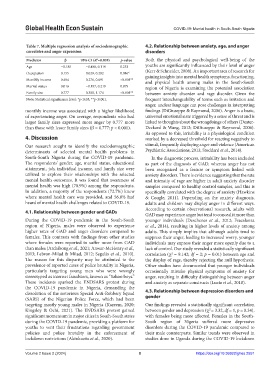
            Table 7. Multiple regression analysis of sociodemographic   4.2. Relationship between anxiety, age, and anger
            correlates and anger expression                    disorders
            Predictor        β     95% CI (R =0.039)  p‑value  Both the physical and psychological well-being of the
                                          2
            Age            −0.185    −0.488, 0.119  0.233      youths are significantly influenced by their level of anger
            Occupation     0.155         0.029, 0.282  0.016*  (Kerr & Schneider, 2008). An important area of research for
                                                               gaining insights into mental health symptoms, functioning,
            Monthly income  0.484        0.276, 0.691  <0.001**  and physical health among males in the South-South
            Marital status  0.016    −0.187, 0.219  0.879      region of Nigeria is examining the potential association
            Family size    0.777         0.380, 1.174  <0.001**  between  anxiety  disorder and rage disorder. Given the
            Note: Statistical significance level: *p<0.05; **p<0.001.  frequent interchangeability of terms such as irritation and
                                                               anger, unclear language can pose challenges in interpreting
            monthly income was associated with a higher likelihood   findings (DiGiuseppe & Raymond, 2006). Anger is a basic,
            of experiencing anger. On average, respondents who had   universal emotional state triggered by a sense of threat and is
            larger family sizes expressed more anger by 0.777 more   linked to thoughts about the wrongdoings of others (Deater-
            than those with lesser family sizes (β = 0.777; p < 0.001).  Deckard & Wang, 2012; DiGiuseppe & Raymond, 2006).
                                                               As opposed to this, irritability is a physiological condition
            4. Discussion                                      marked by a decreased threshold for reacting negatively to
            Our research sought to identify the sociodemographic   stimuli, frequently displaying anger and violence (American
            determinants of  selected mental health problems in   Psychiatric Associations, 2013; Stoddard et al., 2014).
            South-South Nigeria during the COVID-19 pandemic.    In the diagnostic process, irritability has been included
            The respondents’ gender, age, marital status, educational   as part of the diagnosis of GAD, whereas anger has not
            attainment, job, individual income, and family size were   been recognized as a feature or symptom linked with
            utilized to explore their relationships with the selected   anxiety disorders. There is evidence suggesting that the rate
            mental  health outcomes.  It was found  that  awareness  of   and intensity of rage are higher in adult anxiety disorder
            mental health was high (70.9%) among the respondents.   samples compared to healthy control samples, and this is
            In addition, a majority of the respondents (72.7%) knew   specifically correlated with the degree of anxiety (Hawkins
            where mental health care was provided, and 56.8% had   & Cougle, 2011). Depending on the anxiety diagnosis,
            heard of mental health challenges related to COVID-19.  adults and children may display anger in different ways.
                                                               According to certain observational research, adults with
            4.1. Relationship between gender and GADs
                                                               GAD may experience anger but tend to conceal it more than
            During the COVID-19 pandemic in the South-South    younger individuals (Deschenes et al., 2012; Fracalanza
            region of Nigeria, males were observed to experience   et al., 2014), resulting in higher levels of anxiety among
            higher rates of GAD and anger disorders compared to   adults. This simply implies that although adults tend to
            females. This contrasts with findings from other studies   suppress their anger, leading to increased worry, younger
            where females were reported to suffer more from GAD   individuals may express their anger more openly due to a
            than males (Archibong et al., 2021; Anwar-McHenry et al.,   lack of control. Our study revealed a statistically significant
            2013; Lebron-Milad & Milad, 2012; Segalàs et al., 2010).   correlation (χ  = 9.142; df = 2; p = 0.01) between age and
                                                                          2
            The reason for this disparity may be attributed to the   the display of rage, thereby rejecting the null hypothesis.
            prevalence of reported cases of police brutality in Nigeria,   Other studies have documented that younger individuals
            particularly  targeting  young men  who  were wrongly   occasionally mistake physical symptoms of anxiety for
            stereotyped as internet fraudsters, known as “Yahoo boys.”   anger, resulting in difficulty distinguishing between anger
            These incidents sparked the ENDSARS protest during   and anxiety as separate constructs (Lucia et al., 2018).
            the COVID-19 pandemic in Nigeria, demanding the
            dissolution of the notorious Special Anti-Robbery Squad   4.3. Relationship between depression disorders and
            (SARS) of the Nigerian Police Force, which had been   gender
            targeting mostly young males in Nigeria (Kazeem, 2020;   Our findings revealed a statistically significant correlation
            Kingsley & Ochi, 2021). The ENDSARS  protest gained   between gender and depression (χ = 3.32, df = 1, p = 0.34),
                                                                                          2
            significant momentum in major cities in South-South states   with females being more affected. Females in the South-
            during the COVID-19 pandemic, providing a platform for   South region of Nigeria suffered more depressive
            youths  to vent  their  frustrations  regarding  government   disorders during the COVID-19 pandemic compared to
            policies and police brutality in the enforcement of   their male counterparts. Similar trends were observed in
            lockdown restrictions (Akinkuotu et al., 2020).    studies done in Uganda during the COVID-19 lockdown


            Volume 2 Issue 2 (2024)                         8                        https://doi.org/10.36922/ghes.2551

