


Page 89 - GHES-2-2
P. 89
Global Health Econ Sustain                                         HCWs and violence in emergency services


                                                               abuse and insults. In addition, violence manifested as the
                                                               destruction of departmental equipment, such as doors,
                                                               glass, and chairs. In more severe cases, physical violence
                                                               such as blows, slaps, or kicks resulting in physical injuries
                                                               accounted for 3% of the reported incidents.
                                                                 Among 75 participants, only 45% opted for judicial
                                                               trial. Unfortunately, more than 50% of these cases were
                                                               terminated with withdrawal, as illustrated by  Figure  5.
                                                               Nevertheless, the interpretation of this trend suggests that
                                                               patients and their companions arrive at hospitals with
                                                               the preconceived notion that resorting to violence and
                                                               causing disturbance by shouting and disputing (Stephens,
                                                               2019) are the most effective means to receive prompt
                                                               and satisfactory service. When HCWs did pursue legal
                                                               action, patients and their families often recognized their
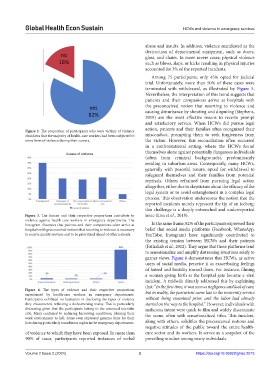
            Figure 2. The proportion of participants who were victims of violence
            elucidates that the majority of health-care workers had been subjected to   misconduct, prompting them to seek forgiveness from
            some form of violence during their careers.        the victim. However, this reconciliation often occurred
                                                               in a confrontational setting, where the HCWs found
                                                               themselves alone against potentially dangerous individuals
                                                               (often from criminal backgrounds), predominantly
                                                               residing in suburban areas. Consequently, many HCWs,
                                                               generally with peaceful nature, opted for withdrawal to
                                                               safeguard themselves and their families from potential
                                                               reprisals. Others refrained from pursuing legal action
                                                               altogether, either due to skepticism about the efficacy of the
                                                               legal system or to avoid entanglement in a complex legal
                                                               process. This observation underscores the notion that the
                                                               reported incidents merely represent the tip of an iceberg;
                                                               this challenge is a deeply entrenched and underreported
            Figure  3. The factors and their respective proportions contribute to   issue (Lisa et al., 2018).
            violence against health-care workers in emergency departments. The
            histogram illustrates that patients and their companions often arrive at   In the same frame, 82% of the participants expressed their
            hospitals with preconceived notions that resorting to violence is necessary   belief that social media platforms (Facebook, WhatsApp,
            to receive quality services and to be prioritized ahead of other patients.  YouTube, Instagram) have significantly contributed to
                                                               the existing tension between HCWs and their patients
                                                               (Fathallah et al., 2012). They argue that these platforms tend
                                                               to sensationalize and amplify distressing situations solely to
                                                               garner views. Figure 6 demonstrates that HCWs, as active
                                                               users of social media, perceive it as exacerbating feelings
                                                               of hatred and hostility toward them. For instance, filming
                                                               a woman giving birth at the hospital gate became a viral
                                                               incident. A midwife directly addressed this by explaining
                                                               that: “In the first time, it was seen as negligence and lack of care,
            Figure  4. The types of violence and their respective proportions   but in reality, the parturient came late to the maternity service
            experienced by health-care workers in emergency departments.
            Participants exhibited no hesitation in disclosing the types of violence   without being examined prior, and the labor had already
            they encountered, reflecting a disheartening reality. This is particularly   started on the way to the hospital.” However, individuals with
            distressing given that the participants belong to the esteemed scientific   malicious intent were quick to film and widely disseminate
            elite. Many confessed to enduring harrowing conditions, likening their   the scene, often with sensationalized titles. This incident,
            work environment to hell. Some even expressed genuine fears for their
            lives during particularly tumultuous nights in the emergency departments.  along with others, solidifies the preconceived notions and
                                                               negative attitudes of the public toward the entire health-
            of violence to which they have been exposed. In more than   care sector and its workers. It serves as a snapshot of the
            90% of cases, participants reported instances of verbal   prevailing mindset among many individuals.


            Volume 2 Issue 2 (2024)                         3                        https://doi.org/10.36922/ghes.2015

