


Page 110 - GHES-2-4
P. 110
Global Health Economics and
            Sustainability
                                                                           Cost-effectiveness of oral semaglutide in Greece


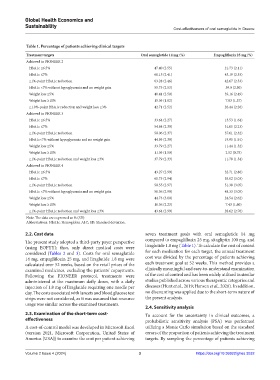
            Table 1. Percentage of patients achieving clinical targets
            Treatment targets                                Oral semaglutide 14 mg (%)     Empagliflozin 25 mg (%)
            Achieved in PIONEER 2
             HbA1c ≤6.5%                                           47.40 (2.55)                  21.73 (2.11)
             HbA1c ≤7%                                             66.15 (2.41)                  43.19 (2.53)
             ≥1%-point HbA1c reduction                             63.28 (2.46)                  42.67 (2.53)
             HbA1c <7% without hypoglycemia and no weight gain     55.73 (2.53)                  39.0 (2.50)
             Weight loss ≥5%                                       40.41 (2.50)                  39.16 (2.49)
             Weight loss ≥10%                                      15.03 (1.82)                  7.83 (1.37)
             ≥1.0%-point HbA1c reduction and weight loss ≥3%       42.71 (2.52)                  26.44 (2.26)
            Achieved in PIONEER 3
             HbA1c ≤6.5%                                           33.64 (2.27)                  13.53 (1.64)
             HbA1c ≤7%                                             54.84 (2.39)                  31.65 (2.23)
             ≥1%-point HbA1c reduction                             58.06 (2.37)                  37.61 (2.32)
             HbA1c<7% without hypoglycemia and no weight gain      44.93 (2.39)                  19.95 (1.91)
             Weight loss ≥5%                                       33.79 (2.27)                  11.44 (1.52)
             Weight loss ≥10%                                      11.03 (1.50)                  2.52 (0.75)
             ≥1%-point HbA1c reduction and weight loss ≥3%         37.79 (2.33)                  11.70 (1.54)
            Achieved in PIONEER 4
             HbA1c ≤6.5%                                           43.27 (2.99)                  32.71 (2.86)
             HbA1c ≤7%                                             60.73 (2.94)                  55.02 (3.03)
             ≥1%-point HbA1c reduction                             58.55 (2.97)                  51.30 (3.05)
             HbA1c <7% without hypoglycemia and no weight gain     56.36 (2.99)                  48.33 (3.05)
             Weight loss ≥5%                                       44.73 (3.00)                  24.54 (2.62)
             Weight loss ≥10%                                      16.36 (2.23)                  7.43 (1.60)
             ≥1%-point HbA1c reduction and weight loss ≥3%         43.64 (2.99)                  28.62 (2.76)
            Note: The data are expressed as % (SD).
            Abbreviations: HbA1c: Hemoglobin A1C; SD: Standard deviation.

            2.2. Cost data                                     seven  treatment  goals  with  oral  semaglutide  14  mg

            The present study adopted a third-party payer perspective   compared to empagliflozin 25 mg, sitagliptin 100 mg, and
            (using EOPYY); thus, only direct medical costs were   liraglutide 1.8 mg (Table 1). To calculate the cost of control
            considered (Tables  2  and  3). Costs for oral semaglutide   for each medication for each target, the annual treatment
            14 mg, empagliflozin 25 mg, and liraglutide 1.8 mg were   cost was divided by the percentage of patients achieving
            calculated over 52 weeks, based on the retail prices of the   each treatment goal at 52 weeks. This method provides a
            examined medicines, excluding the patients’ copayments.   clinically meaningful and easy-to-understand examination
            Following the PIONEER protocol, treatments were    of the cost of control and has been widely utilized in similar
            administered at the maximum daily doses, with a daily   studies published across various therapeutic categories and
            injection of 1.8 mg of liraglutide requiring one needle per   diseases (Hunt et al., 2019; Hansen et al., 2020). In addition,
            day. The costs associated with lancets and blood glucose test   no discounting was applied due to the short-term nature of
            strips were not considered, as it was assumed that resource   the present analysis.
            usage was similar across the examined treatments.
                                                               2.4. Sensitivity analysis
            2.3. Examination of the short-term cost-           To account for the uncertainty in clinical outcomes, a
            effectiveness                                      probabilistic sensitivity analysis (PSA) was performed
            A cost-of-control model was developed in Microsoft Excel   utilizing a Monte Carlo simulation based on the standard
            (version  2021, Microsoft Corporation, United States of   errors of the proportion of patients achieving the treatment
            America [USA]) to examine the cost per patient achieving   targets. By sampling the percentage of patients achieving


            Volume 2 Issue 4 (2024)                         3                        https://doi.org/10.36922/ghes.3032

