


Page 159 - GHES-2-4
P. 159
Global Health Economics and
            Sustainability
                                                                               Impact of dating violence on mental health


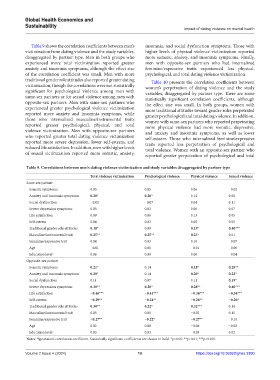
              Table 9 shows the correlation coefficients between men’s   insomnia, and social dysfunction symptoms. Those with
            victimization from dating violence and the study variables,   higher  levels of physical  violence victimization reported
            disaggregated by partner type. Men in both groups who   more somatic, anxiety, and insomnia symptoms. Finally,
            experienced more total victimization reported greater   men with opposite-sex partners who had internalized
            anxiety and insomnia symptoms, although the effect size   feminine/expressive traits experienced less physical,
            of  the correlation  coefficient was  small.  Men  with more   psychological, and total dating violence victimization.
            traditional gender role attitudes also reported greater dating   Table 10 presents the correlation coefficients between
            victimization, though the correlations were not statistically   women’s perpetration of dating violence and the study
            significant for psychological violence among men with   variables, disaggregated by partner type. There are some
            same-sex partners or for sexual violence among men with   statistically significant correlation coefficients, although
            opposite-sex partners. Men with same-sex partners who   the effect size was small. In both groups, women with
            experienced greater psychological violence victimization   more traditional attitudes toward gender roles perpetrated
            reported more anxiety and insomnia symptoms, while   greater psychological and total dating violence. In addition,
            those who internalized masculine/instrumental traits   women with same-sex partners who reported perpetrating
            reported greater psychological, physical, and total   more physical violence had more somatic, depressive,
            violence victimization. Men with opposite-sex partners   and anxiety and insomnia symptoms, as well as lower
            who  reported  greater  total dating violence  victimization   self-esteem. Those who internalized feminine/expressive
            reported more severe depression, lower self-esteem, and   traits reported less perpetration of psychological and
            reduced life satisfaction. In addition, men with higher levels   total violence. Women with an opposite-sex partner who
            of sexual victimization reported more somatic, anxiety,   reported greater perpetration of psychological and total


            Table 9. Correlations between men’s dating violence victimization and study variables disaggregated by partner type
                                       Total violence victimization  Psychological violence  Physical violence  Sexual violence
            Same-sex partner
             Somatic symptoms          0.05                    0.05               0.06            −0.02
             Anxiety and insomnia symptoms  0.20*              0.20*              0.14            0.08
             Social dysfunction        −0.02                   −0.07              0.04            0.11
             Severe depression symptoms  0.05                  0.03               0.06            0.07
             Life satisfaction         0.09                    0.06               0.13            0.05
             Self-esteem               0.04                    0.03               0.05            0.05
             Traditional gender role attitudes  0.18*          0.09               0.19*           0.40***
             Masculine/instrumental trait  0.25**              0.25**             0.23*           0.01
             Feminine/expressive trait  0.04                   0.03               0.10            −0.07
             Age                       −0.01                   0.01               −0.01           −0.06
             Education level  a        0.06                    0.09               0.00            −0.04
            Opposite-sex partner
             Somatic symptoms          0.21*                   0.14               0.18*           0.29**
             Anxiety and insomnia symptoms  0.20*              0.14               0.20*           0.22*
             Social dysfunction        0.11                    0.07               0.11            0.19*
             Severe depression symptoms  0.30**                0.20*              0.28**          0.40***
             Life satisfaction         −0.46***                −0.41***           −0.36***        −0.34***
             Self-esteem               −0.29**                 −0.24**            −0.26**         −0.20*
             Traditional gender role attitudes  0.30**         0.22*              0.32***         0.14
             Masculine/instrumental trait  0.05                0.00               −0.02           0.10
             Feminine/expressive trait  −0.27**                −0.22*             −0.27**         −0.10
             Age                       0.02                    0.08               −0.06           −0.03
             Education level a         0.03                    0.03               −0.05           0.02
            Notes:  Spearman’s correlation coefficient. Statistically significant coefficients are shown in bold. *p<0.05; **p<0.01; ***p<0.001.
                 a

            Volume 2 Issue 4 (2024)                         10                       https://doi.org/10.36922/ghes.3300

