


Page 156 - GHES-2-4
P. 156
Global Health Economics and
            Sustainability
                                                                               Impact of dating violence on mental health


            Table 5. M, SD, and two‑way factorial ANOVA for violence perpetration
                                           Opposite‑sex partner  Same‑sex partner            ANOVA
                                             M         SD        M         SD         Effect      F       ηp 2
            Psychological violence
             Women                          0.75       1.09      1.01      1.51    Type of Partner  0.84  0.002
             Men                            0.97       1.49      0.92      1.21      Gender       0.33   0.001
             Interaction type of partner×gender                                       TP×G        1.64   0.003
            Physical violence
             Women                          0.08       0.38      0.13      0.49    Type of Partner  2.66  0.005
             Men                            0.48       2.02      0.14      0.50      Gender      4.85*   0.009
             Interaction Type of Partner×Gender                                       TP×G       4.68*   0.009
            Sexual violence
             Women                          0.02       0.14      0.04      0.29    Type of Partner  0.07  0.000
             Men                            0.07       0.42      0.06      0.30      Gender       1.47   0.003
             Interaction Type of Partner×Gender                                       TP×G        0.29   0.001
            Notes: TP×G: Interaction Type of Partner×Gender. *p<0.05.
            Abbreviations: M: Means; SD: Standard deviations; ANOVA: Analysis of variance.

                                                               violence, except for item 7, which states “He/she watches
                                                               you, tells you where to go, follows you.” This behavior
                                                               occurred only occasionally among women with same-sex
                                                               partners but happened “many times” in the other groups.
                                                               There was also variability in responses to an item assessing
                                                               sexual violence, which states, “He/she imposes sexual acts
                                                               that you do not like or want to do by using force or threats.”
                                                               Responses to another item assessing sexual violence, “He/
                                                               she threatens to leave you if you do not comply with his/her
                                                               sexual desires,” showed that it occurred only occasionally
                                                               among women and men with opposite-sex partners but
                                                               frequently among some women and men with same-
                                                               sex partners. In analyzing severe violence, we found that
                                                               only one woman with an opposite-sex partner reported
                                                               severe physical abuse or an attempt to suffocate her, and
                                                               four individuals (two men with an opposite-sex partner,
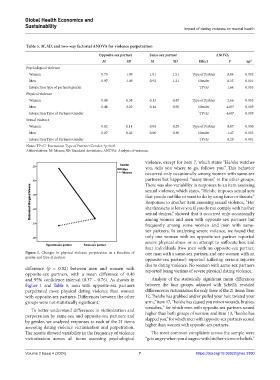
            Figure  1. Changes in physical violence perpetration as a function of   one man with a same-sex partner, and one woman with an
            gender and type of partner
                                                               opposite-sex  partner)  reported  suffering  serious  injuries
                                                               due to dating violence. No women with same-sex partners
            difference (p = 0.02) between men and women with   reported being victims of severe physical dating violence.
            opposite-sex partners, with a mean difference of 0.40
            and 95% confidence interval (0.37 – 0.76). As shown in   Analysis of the statistically significant mean differences
            Figure  1  and  Table 5, men with opposite-sex partners   between the four groups, adjusted with Scheffé, revealed
            perpetrated  more physical  dating violence than  women   differences in victimization for only three of the 21 items: Item
            with opposite-sex partners. Differences between the other   12, “he/she has grabbed and/or pulled your hair, twisted your
            groups were not statistically significant.         arm.;” item 17, “he/she has caused you minor wounds, bruises,
                                                               scratches.,” for which men with opposite-sex partners scored
              To better understand differences in victimization and
            perpetration by same-sex and opposite-sex partners and   higher than both groups of women; and item 13, “he/she has
                                                               slapped you,” for which men with opposite-sex partners scored
            by gender, we analyzed responses to each of the 21 items   higher than women with opposite-sex partners.
            assessing dating violence victimization and perpetration.
            The results showed variability in the frequency of violence   The most common complaints across the sample were
            victimization across all items assessing psychological   “gets angry when you disagree with his/her views or beliefs,”


            Volume 2 Issue 4 (2024)                         7                        https://doi.org/10.36922/ghes.3300

