


Page 158 - GHES-3-2
P. 158
Global Health Economics and
            Sustainability
                                                                             Vaccine hesitancy in the US, India, and China


            Table 4. (Continued)
            Category                        OR             2.5% CI            97.5% CI              p‑value
            Mobility (impaired)
             Not impaired                   1.21            0.95               1.54                  0.11
            Remembering (impaired)
             Not impaired                   1.02            0.81               1.29                  0.80
            State (Great LAKES)
             Mid-Atlantic                   1.41            0.35               9.60                  0.66
             Northeast                      1.63            0.39               11.33                 0.54
             Southeast                      1.48            0.37               10.04                 0.62
             Southwest                      1.24            0.75               2.06                  0.38
             West                           0.75            0.00               0.00                  0.08
            Political view (blue)
             Swing                          1.06            0.54               1.04                  0.93
             Red                            15.32           0.29               6.77                  <0.00
            Note: P<0.05 refers to statistically significant odds of being Hesitant versus Not Hesitant.
            Abbreviations: CI: Confidence interval; OR: Odds ratio; SE: Standard error.

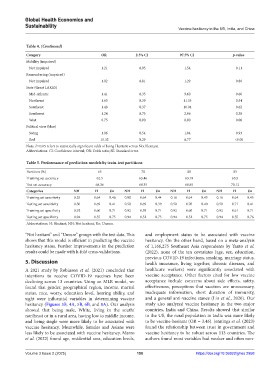
            Table 5. Performance of prediction models by train‑test partitions

            Partition (%)                  65                70                  80                 85
            Training set accuracy         62.5              63.46               63.19               63.5
            Test set accuracy             68.36             68.35               68.85              70.12
            Categories          NH        H     Un    NH     H     Un     NH     H     Un    NH     H     Un
            Training set sensitivity  0.25  0.64  0.46  0.00  0.64  0.44  0.16  0.64   0.43  0.16   0.64  0.45
            Testing set sensitivity  0.50  0.69  0.41  0.50  0.69  0.39   0.50  0.70   0.40  0.50   0.71  0.41
            Training set specificity  0.92  0.60  0.71  0.92  0.59  0.71  0.92  0.60   0.71  0.92   0.61  0.71
            Testing set specificity  0.94  0.55  0.75  0.94  0.52  0.75   0.94  0.52   0.75  0.94   0.55  0.76
            Abbreviations: H: Hesitant; NH: Not hesitant; Un: Unsure.

            “Not hesitant” and “Unsure” groups with the test data. This   and  employment  status  to  be  associated  with  vaccine
            shows that this model is efficient in predicting the vaccine   hesitancy. On the other hand, based on a meta-analysis
            hesitancy status. Further improvements in the prediction   of 1,166,275 Southeast Asia respondents by Yanto  et al.
            results could be made with k-fold cross-validations.  (2022), none of the ten covariates (age, sex, education,
                                                               previous COVID-19 infections, smoking, marriage status,
            5. Discussion                                      health insurance, living together, chronic diseases, and
            A 2021 study by Robinson  et  al. (2021) concluded that   healthcare  workers)  were  significantly  associated  with
            intentions to receive COVID-19  vaccines  have been   vaccine acceptance. Other factors cited for low vaccine
            declining across 13 countries. Using an MLR model, we   acceptance include concerns about side effects, safety,
            found that gender, geographical region, income, marital   effectiveness, perceptions that vaccines are unnecessary,
            status, race, worry, education level, hearing ability, and   inadequate information, short duration of immunity,
            sight were influential  variables  in determining  vaccine   and a general anti-vaccine stance (Lin et al., 2020). Our
            hesitancy (Figures 3B, 4A, 5B, 6B, and 8A). Our analysis   study also analyzed vaccine hesitancy in the two major
            showed that being male, White, living in the south/  countries, India and China. Results showed that similar
            northeast or in a rural area, having low to middle income,   to the US, the rural population in India was more likely
            and being  single were more  likely to be  associated  with   to be vaccine-hesitant (OR = 3.46). Jennings et al. (2023)
            vaccine hesitancy. Meanwhile, females and Asians were   found the relationship between trust in government and
            less likely to be associated with vaccine hesitancy. Marzo   vaccine hesitancy to be robust across 113 countries. The
            et al. (2022) found age, residential area, education levels,   authors found most variables had weaker and often non-


            Volume 3 Issue 2 (2025)                        150                       https://doi.org/10.36922/ghes.2958

