


Page 150 - GHES-3-3
P. 150
Global Health Economics and
            Sustainability
                                                                                             A comparative analysis


            curves, followed by states like Sikkim, Tamil Nadu, and   Table 3. Correlation of expenditure indicators with Theil’s
            Punjab.                                            statistic for total health expenditure
              Figures 2 and 3 show that the states had value for total   Indicators                 Correlation
            health expenditure. The lagged health expenditure showed                                 coefficient
            the highest correlation among all the variables.   Total health expenditure in 1 year lag period   −0.256
                                                               (2018 – 2019)
              Table 3 presents the Pearson’s correlation coefficients.
            Except for average health expenditure during the   Average health expenditure during the          0.008
                                                               COVID-19 period
            COVID-19  period and total health expenditure in one
            1-year lag period, Theil’s capital and revenue expenditure   Theil’s statistic for capital health expenditure  −0.092
            statistics were negatively correlated with the Theil statistics.  Theil’s statistic for revenue health expenditure  −0.019
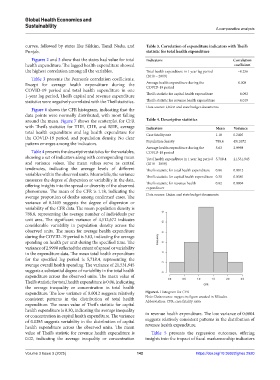
              Figure 6 shows the CFR histogram, indicating that the   Data source: Union and state budget documents.
            data points were normally distributed, with most falling
            around the mean. Figure 7 shows the scatterplot for CFR   Table 4. Descriptive statistics
            with Theil’s statistics for THE, CHE, and RHE, average   Indicators              Mean   Variance
            total health expenditure and lag health expenditure for   Case fatality rate     1.18   0.2405
            the COVID-19 period, and population density. No clear
            pattern emerges among the indicators.              Population density            788.6  4512672
                                                               Average health expenditure during the   5.63  2.9998
              Table 4 presents the descriptive statistics for the variables,   COVID-19 period
            showing a set of indicators along with corresponding mean   Total health expenditure in 1 year lag period  5,718.4  21,531,945
            and variance values. The mean values serve as central   (2018 – 2019)
            tendencies, indicating the average levels of different   Theil’s statistic for total health expenditure  0.06  0.0012
            variables within the observed units. Meanwhile, the variance   Theil’s statistic for capital health expenditure 0.30  0.0385
            measures the degree of dispersion or variability in the data,
            offering insights into the spread or diversity of the observed   Theil’s statistic for revenue health   0.02  0.0004
                                                               expenditure
            phenomena. The mean of the CFR is 1.18, indicating the
            average proportion of deaths among confirmed cases. The   Data source: Union and state budget documents.
            variance  of 0.2405  suggests the degree  of  dispersion  or
            variability of the CFR data. The mean population density is
            788.6, representing the average number of individuals per
            unit  area.  The  significant  variance  of  4,512,672  indicates
            considerable variability in population density across the
            observed units. The mean for average health expenditure
            during the COVID-19 period is 5.63, indicating the average
            spending on health per unit during the specified time. The
            variance of 2.9998 reflected the extent of spread or variability
            in the expenditure data. The mean total health expenditure
            for the specified lag period is 5,718.4, representing the
            average overall health spending. The variance of 21,531,945
            suggests a substantial degree of variability in the total health
            expenditure across the observed units. The mean value of
            Theil’s statistic for total health expenditure is 0.06, indicating
            the average inequality or concentration in total health
            expenditure. The low variance of 0.0012 suggests relatively   Figure 6. Histogram for CFR
            consistent  patterns  in  the  distribution  of  total  health   Note: Data source: mygov.in; figure created in RStudio.
                                                               Abbreviation: CFR: case fatality ratio.
            expenditure. The mean value of Theil’s statistic for capital
            health expenditure is 0.30, indicating the average inequality
            or concentration in capital health expenditure. The variance   in revenue health expenditure. The low variance of 0.0004
            of 0.0385 suggests variability in the distribution of capital   suggests relatively consistent patterns in the distribution of
            health expenditure across the observed units. The mean   revenue health expenditure.
            value of Theil’s statistic for revenue health expenditure is   Table 5 presents the regression outcomes, offering
            0.02, indicating the average inequality or concentration   insights into the impact of fiscal marksmanship indicators


            Volume 3 Issue 3 (2025)                        142                       https://doi.org/10.36922/ghes.2920

