


Page 227 - GHES-3-3
P. 227
Global Health Economics and
            Sustainability
                                                                       COVID-19 vaccination decisions and mandate impact


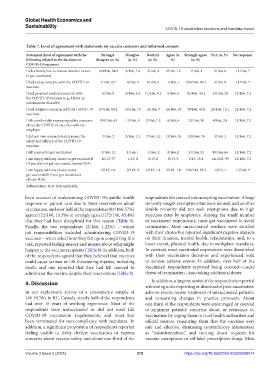
            Table 7. Level of agreement with statements on vaccine concerns and informed consent
            Statement (level of agreement with the   Strongly   Disagree   Neutral   Agree (n,  Strongly agree  N/A (n, %)  No response
            following related to the decision on   disagree (n, %)  (n, %)  (n, %)  %)  (n, %)
            COVID‑19 vaccines)
            I felt entirely free to choose whether or not   140/166, 84.3  9/166, 5.4  3/166, 2  2/166, 1.2  1/166, 1  0/166, 0  11/166, 7
            to get vaccinated
            I had safety concerns with the COVID-19   4/166, 2/4  0/166, 0  0/166, 0  1/166, 1  150/166, 90.4  0/166, 0  11/166, 7
            vaccines
            I had personal medical concerns with   8/166, 9  6/166, 6.2  11/166, 9.2  5/166, 6  91/166, 45.4  33/166, 20  12/166, 7.2
            the COVID-19 vaccines (e.g., I have an
            autoimmune disorder)
            I had religious concerns with the COVID-19   17/166, 10.2  16/166, 10  11/166, 7  16/166, 10  79/166, 47.6  25/166, 15.1  12/166, 7.2
            vaccines.
            I felt comfortable expressing safety concerns   104/166, 63  15/166, 9  2/166, 1.2  6/166, 4  23/166, 14  4/166, 2.4  12/166, 7.2
            about the COVID-19 vaccines with my
            employer
            I did my own research to determine the   3/166, 2  2/166, 1.2  7/166, 4.2  13/166, 18  126/166, 76  3/166, 2  12/166, 7.2
            safety and efficacy of the COVID-19
            vaccines
            I felt coerced to get vaccinated   2/166, 12  1/166, 1  1/166, 1  0/166, 0  51/166, 31  99/166, 66  12/166, 7.2
            I am happy with my choice to get vaccinated   10/13, 77  1/13, 8  0/13, 0  0/13, 0  2/13, 15.4  141/143, 99  12/166, 7.2
            (if you did not get vaccinated, choose N/A)
            I am happy with my choice to not   2/143, 1.4  0/143, 0  2/143, 1.4  2/143, 1.4  132/143, 92.3  13/13, 1  15/166, 9
            get vaccinated (if you got vaccinated,
            choose N/A)
            Abbreviation: N/A: Not applicable.

            been accused of undermining COVID-19’s public health   respondents felt coerced into accepting vaccination. A large
            response or patient care due to their reservations about   minority sought exemptions but were denied, and another
            vaccination, and over half of the respondents (94/166, 57%)   sizable minority did not seek exemptions due to high
            agreed (22/166, 13.3%) or strongly agreed (72/166, 43.4%)   rejection rates by employers. Among the small number
            that they had been disciplined for this reason (Table 9).   of vaccinated respondents, most got vaccinated to avoid
            Finally, the two respondents (2/166, 1.22%) – whose   termination. Most unvaccinated workers were satisfied
            job responsibilities included administering COVID-19   with their choice but reported significant negative impacts
            vaccines – when asked how they felt upon completing this   on their finances, mental health, relationships, and, to a
            task, reported feeling uneasy and unsure about what might   lesser extent, physical health, due to workplace mandates.
            happen to the vaccine recipients (Table 8). In addition, both   In contrast, most vaccinated respondents were dissatisfied
            of the respondents agreed that they believed that vaccines   with  their vaccination decisions and  experienced  mild
            could cause serious or life-threatening injuries, including   to serious adverse events. In addition, over half of the
            death, and one reported that they had felt coerced to   vaccinated respondents reported being coerced—under
            administer the vaccine despite their reservations (Table 9).  threat of termination—into taking additional doses.
            4. Discussion                                        In addition, a large minority of the respondents reported
                                                               witnessing underreporting or dismissal of post-vaccination
            In our exploratory survey of a convenience sample of   adverse events, worse treatment of unvaccinated patients,
            166 HCWs in BC, Canada, nearly half of the respondents   and concerning changes in practice protocols. About
            had over 16  years of working experience. Most of the   one-third of the respondents were encouraged or coerced
            respondents were unvaccinated or did not meet full   to  minimize  patients’  concerns  about,  or  resistance  to,
            COVID-19 vaccination requirements, and most had    vaccination by urging them to trust health authorities and
            been terminated for non-compliance with mandates. In   official  sources,  reassuring  them  that  the  vaccines  were
            addition, a significant proportion of respondents reported   safe and effective, dismissing contradictory information
            feeling unable to freely decline vaccination or express   as “misinformation,” and turning down requests for
            concerns about vaccine safety, and about one-third of the   vaccine exemptions or off-label prescription drugs. Most


            Volume 3 Issue 3 (2025)                        219                 https://doi.org/10.36922/GHES025080014

