


Page 225 - GHES-3-3
P. 225
Global Health Economics and
            Sustainability
                                                                       COVID-19 vaccination decisions and mandate impact


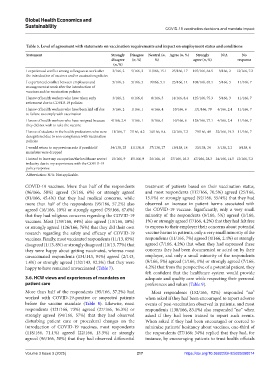
            Table 5. Level of agreement with statements on vaccination requirements and impact on employment status and conditions
            Statement                           Strongly   Disagree   Neutral (n,  Agree (n, %)  Strongly   N/A  No
                                                disagree   (n, %)  %)              agree (n, %)       response
                                                 (n, %)
            I experienced conflict among colleagues at work after   3/166, 2  5/166, 3  11/166, 15.1  25/166, 17  107/166, 64.5  3/166, 2  12/166, 7.2
            the introduction of vaccines and/or vaccination policies
            I experienced conflict between employees and   5/166, 3  5/166, 3  9/166, 5.4  23/166, 14  108/166, 65.1  5/166, 3  11/166, 7
            management at work after the introduction of
            vaccines and/or vaccination policies
            I know of health workers who have taken early   3/166, 2  0/166, 0  8/166, 5  14/166, 8.4  125/166, 75.3  5/166, 3  11/166, 7
            retirement due to COVID-19 policies
            I know of health workers who have been laid off due   3/166, 2  1/166, 1  6/166, 4  10/166, 6  131/166, 79  4/166, 2.4  11/166, 7
            to failure to comply with vaccination
            I know of health workers who have resigned because   4/166, 2.4  1/166, 1  8/166, 5  10/166, 6  128/166, 77.1  4/166, 2.4  11/166, 7
            they did not wish to take the vaccine
            I know of students in the health professions who were   11/166, 7  7/166, 4.2  14/166, 8.4  12/166, 7.2  79/166, 48  32/166, 19.3  11/166, 7
            deregistered due to non-compliance with vaccination
            policies
            I would return to my previous role if possible/if   34/138, 25  11/138, 8  37/138, 27  19/138, 14  33/138, 24  3/138, 2.2  0/138, 0
            mandates were dropped
            I intend to leave my occupation/the healthcare sector/  15/166, 9  15/166, 9  26/166, 16  27/166, 16.3  47/166, 28.3 24/166, 14.5 12/166, 7.2
            industry due to my experiences with the COVID-19
            policy response
            Abbreviation: N/A: Not applicable.

            COVID-19  vaccines.  More  than  half  of  the  respondents   treatment of patients based on their vaccination status,
            (96/166, 58%) agreed (5/166, 6%) or strongly agreed   and most respondents (117/166, 70.5%) agreed (25/166,
            (91/166, 45.4%) that they had medical concerns, while   15.1%) or strongly agreed (92/166, 55/4%) that they had
            more  than  half  of the  respondents  (95/166, 57.2%)  also   observed an increase in patient harms associated with
            agreed (16/166, 10%) or strongly agreed (79/166, 47.6%)   the COVID-19 vaccine. Significantly, only a very small
            that they had religious concerns regarding the COVID-19   minority of the respondents (8/166, 5%) agreed (1/166,
            vaccines. Most (139/166, 84%) also agreed (13/166, 18%)   1%) or strongly agreed (7/166, 4.2%) that they had felt free
            or strongly agreed (126/166, 76%) that they did their own   to express to their employer their concerns about potential
            research regarding the safety and efficacy of COVID-19   vaccine harms in patients, only a very small minority of the
            vaccines. Finally, most vaccinated respondents (11/13, 85%)   respondents (11/166, 7%) agreed (4/166, 2.4%) or strongly
            disagreed (1/13, 8%) or strongly disagreed (10/13, 77%) that   agreed (7/166, 4.2%) that when they had expressed these
            they were happy about getting vaccinated, whereas most   concerns they had been documented or acted on by their
            unvaccinated respondents (134/143, 94%) agreed (2/143,   employer, and only a small minority of the respondents
            1.4%) or strongly agreed (132/143, 92.3%) that they were   (8/166, 5%) agreed (1/166, 1%) or strongly agreed (7/166,
            happy to have remained unvaccinated (Table 7).     4.2%) that from the perspective of a potential patient, they
                                                               felt  confident  that  the  healthcare  system  would  provide
            3.6. HCW views and experiences of mandates on      adequate and quality care while respecting their personal
            patient care                                       preferences and values (Table 9).

            More than half of the respondents (95/166, 57.2%) had   Most respondents (152/166, 92%) responded “no”
            worked with COVID-19-positive or suspected patients   when asked if they had been encouraged to report adverse
            before the vaccine mandate (Table 8). Likewise, most   events of post-vaccination observed in patients, and most
            respondents (121/166, 73%) agreed (27/166, 16.3%) or   respondents (138/166, 83.1%) also responded “no” when
            strongly agreed (94/166, 57%) that they had observed   asked if they had been trained to report such events.
            disturbing patient care or procedural changes on the   When asked if they had been encouraged or coerced to
            introduction of COVID-19 vaccines, most respondents   minimize patients’ hesitancy about vaccines, one-third of
            (118/166, 71.1%) agreed (22/166, 13.3%) or strongly   the respondents (57/166; 34%) replied that they had, for
            agreed (96/166, 58%) that they had observed differential   instance, by encouraging patients to trust health officials


            Volume 3 Issue 3 (2025)                        217                 https://doi.org/10.36922/GHES025080014

