


Page 28 - GPD-1-1
P. 28
Gene & Protein in Disease                                       Photothermal therapy of pentamethine cyanine


            A                              B                   C                     D


                                                                                     E


            F                                                                        G


            H                                I                     J


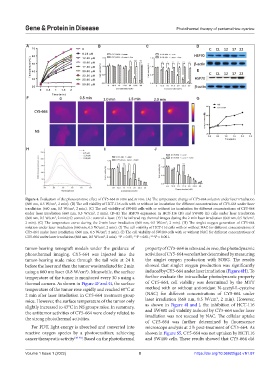
            Figure 4. Evaluation of the photosensitive effect of CY5-664 in vitro and in vivo. (A) The temperature change of CY5-664 solution under laser irradiation
            (660 nm, 0.5 W/cm , 2 min). (B) The cell viability of HCT-116 cells with or without ice incubation for different concentrations of CY5-664 under laser
                         2
                                2
            irradiation (660 nm, 0.5 W/cm , 2 min). (C) The cell viability of SW480 cells with or without ice incubation for different concentrations of CY5-664
            under laser irradiation (660  nm, 0.5  W/cm , 2  min). (D–E) The HSP70 expression in HCT-116 (D) and SW480 (E) cells under laser irradiation
                                         2
                        2
            (660 nm, 0.5 W/cm , 2 min); C: control, CL: control + laser. (F) The infrared ray thermal images during the 2-min laser irradiation (660 nm, 0.5 W/cm ,
                                                                                                            2
                                                                        2
            2 min). (G) The temperature curve during the 2-min laser irradiation (660 nm, 0.5 W/cm , 2 min). (H) The singlet oxygen generation of CY5-664
                                             2
            solution under laser irradiation (660 nm, 0.5 W/cm , 2 min). (I) The cell viability of HCT-116 cells with or without NAC for different concentrations of
            CY5-664 under laser irradiation (660 nm, 0.5 W/cm , 2 min). (J) The cell viability of SW480 cells with or without NAC for different concentrations of
                                              2
            CY5-664 under laser irradiation (660 nm, 0.5 W/cm , 2 min). *P < 0.05; **P < 0.01; ***P < 0.001.
                                             2
            tumor-bearing xenograft models under the guidance of   property of CY5-664 in vitro and in vivo, the photodynamic
            photothermal imaging. CY5-664 was injected into the   activities of CY5-664 were further determined by measuring
            tumor-bearing  nude  mice  through  the  tail  vein  at  24  h   the singlet oxygen production with SOSG. The results
            before the laser and then the tumor was irradiated for 2 min   showed  that singlet  oxygen production  was significantly
            using a 660 nm laser (0.8 W/cm ). Meanwhile, the surface   induced by CY5-664 under laser irradiation (Figure 4H). To
                                      2
            temperature of the tumor is monitored every 30 s using a   further evaluate the intracellular photodynamic property
            thermal camera. As shown in Figure 4F and G, the surface   of  CY5-664,  cell  viability was  determined by  the  MTT
            temperature of the tumor rose rapidly and reached 60°C at   method with or without antioxidant N-acetyl-L-cysteine
            2 min after laser irradiation in CY5-664 treatment group   (NAC) for different concentrations of CY5-664 under
                                                                                             2
            mice. However, the surface temperature of the tumor only   laser irradiation (660 nm, 0.5 W/cm , 2 min). However,
            slightly increased to 43°C in NS groups mice. In summary,   as shown in Figure 4I and J, the inhibition of HCT-116
            the antitumor activities of CY5-664 were closely related to   and SW480 cell viability induced by CY5-664 under laser
            the strong photothermal activities.                irradiation was not rescued by NAC. The cellular uptake
                                                               of CY5-664 was further determined by fluorescence
              For PDT, light energy is absorbed and converted into   microscope analysis at 2 h post-treatment of CY5-664. As
            reactive oxygen species by a photosensitizer, achieving   shown in Figure S5, CY5-664 was not uptaken by HCT116
            cancer therapeutic activity [38-40] . Based on the photothermal   and SW480 cells. These results showed that CY5-664 did


            Volume 1 Issue 1 (2022)                         8                       https://doi.org/10.36922/gpd.v1i1.87

