


Page 26 - GPD-1-1
P. 26
Gene & Protein in Disease                                       Photothermal therapy of pentamethine cyanine


             A                                              B


             C


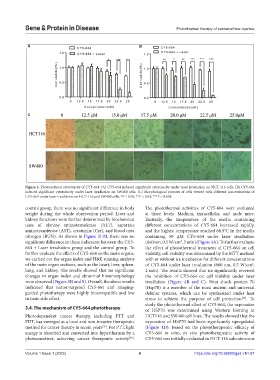
            Figure 2. Photoinduced cytotoxicity of CY5-664. (A) CY5-664 induced significant cytotoxicity under laser irradiation on HCT-116 cells. (B) CY5-664
            induced significant cytotoxicity under laser irradiation on SW480  cells. (C) Morphological pictures of cells treated with different concentrations of
            CY5-664 under laser irradiation on HCT-116 and SW480 cells. *P < 0.05; **P < 0.01; ***P < 0.001.
            control group, there was no significant difference in body   The photothermal activities of CY5-664 were evaluated
            weight during the whole observation period. Liver and   at three levels: Medium, intracellular, and nude mice.
            kidney functions were further determined by biochemical   Excitedly,  the  temperature of the media containing
            tests of alanine aminotransferase (ALT), aspartate   different concentrations of CY5-664 increased rapidly,
            aminotransferase (AST), creatinine (Cre), and blood urea   and the highest temperature reached 68.9°C in the media
            nitrogen (BUN). As shown in Figure 3J-M, there was no   containing 50  μM CY5-664 under laser irradiation
            significant difference in these indicators between the CY5-  (660 nm, 0.5 W/cm , 2 min) (Figure 4A). To further evaluate
                                                                              2
            664 + Laser irradiation group and the control group. To   the effect of photothermal treatment of CY5-664 on cell
            further evaluate the effects of CY5-664 on the main organs,   viability, cell viability was determined by the MTT method
            we carried out the organ index and H&E staining analysis   with or without ice incubation for different concentrations
            of the main organ sections, such as the heart, liver, spleen,   of CY5-664 under laser irradiation (660 nm, 0.5 W/cm ,
                                                                                                            2
            lung, and kidney. The results showed that no significant   2 min). The results showed that ice significantly reversed
            changes in organ index and abnormal histomorphology   the inhibition of CY5-664 on cell viability under laser
            were observed (Figure 3N and S). Overall, the above results   irradiation (Figure  4B and  C). Heat shock protein 70
            indicated  that  tumor-targeted  CY5-664  and  imaging-  (Hsp70) is a member of the most ancient and universal
            guided phototherapy were highly biocompatible and low   defense systems, which can be synthesized under heat
            in toxic side effect.                              stress to achieve the purpose of cell protection . To
                                                                                                        [37]
                                                               study the photothermal effect of CY5-664, the expression
            3.4. The mechanism of CY5-664 phototherapy         of HSP70 was determined using Western blotting in
            Photodependent cancer therapy, including PTT and   HCT116 and SW480 cell lines. The results showed that the
            PDT, has emerged as a local and non-invasive therapeutic   expression of  HSP70  had been significantly  upregulated
            method for cancer therapy in recent years . For PTT, light   (Figure  4D). Based on the phototherapeutic efficacy of
                                            [35]
            energy is absorbed and converted into hyperthermia by a   CY5-664  in vitro,  in vivo phototherapeutic activity of
            photosensitizer, achieving cancer therapeutic activity .   CY5-664 was initially evaluated in HCT-116 subcutaneous
                                                        [36]

            Volume 1 Issue 1 (2022)                         6                       https://doi.org/10.36922/gpd.v1i1.87

