


Page 23 - GPD-1-1
P. 23
Gene & Protein in Disease                                       Photothermal therapy of pentamethine cyanine


            A


            B                                                C


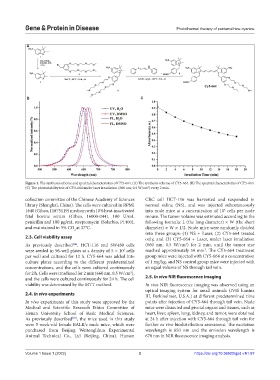
            Figure 1. The synthesis scheme and spectral characteristics of CY5-664. (A) The synthesis scheme of CY5-664. (B) The spectral characteristics of CY5-664.
                                                                2
            (C) The photostability test of CY5-664 under laser irradiation (660 nm, 0.5 W/cm ) every 2 min.
            collection committee of the Chinese Academy of Sciences   CRC cell HCT-116 was harvested and suspended in
            library (Shanghai, China). The cells were cultured in RPMI   normal saline (NS), and was injected subcutaneously
            1640 (Gibco, 11875119) medium with 10% heat-inactivated   into nude mice at a concentration of 10  cells per nude
                                                                                                6
            fetal bovine serum (Gibco, 16000-044), 100  U/mL   mouse. The tumor volume was estimated according to the
            penicillin and 100 μg/mL streptomycin (Solarbio, P1400),   following formula: L (the long diameter) × W (the short
            and maintained in 5% CO at 37°C.                   diameter) × W × 1/2. Nude mice were randomly divided
                                 2
                                                               into three groups: (1) NS +  Laser, (2) CY5-664 treated
            2.3. Cell viability assay                          only, and (3) CY5-664 + Laser, under laser irradiation
                                                                                2
            As previously described , HCT-116 and SW480  cells   (660  nm,  0.5  W/cm ) for 2  min,  until the  tumor  size
                                [24]
                                                                                        3
            were seeded in 96-well plates at a density of 5 × 10  cells   reached approximately 50 mm . The CY5-664 treatment
                                                      3
            per well and cultured for 12 h. CY5-664 was added into   group mice were injected with CY5-664 at a concentration
            culture plates according to the different predetermined   of 1 mg/kg, and NS control group mice were injected with
            concentrations, and the cells were cultured continuously   an equal volume of NS through tail vein.
            for 2 h. Cells were irradiated for 2 min (660 nm, 0.5 W/cm ),
                                                         2
            and the cells were cultured continuously for 24 h. The cell   2.5. In vivo NIR fluorescence imaging
            viability was determined by the MTT method.        In vivo NIR fluorescence imaging was observed using an
                                                               optical imaging system for small animals (IVIS lumina
            2.4. In vivo experiments                           III, Perkinelmer, U.S.A.) at different predetermined time
            In vivo experiments of this study were approved by the   points after injection of CY5-664 through tail vein. Nude
            Medical and Scientific Research Ethics Committee of   mice were dissected and pivotal organs and tissues, such as
            Henan  University  School  of Basic  Medical Sciences.   heart, liver, spleen, lung, kidney, and tumor, were obtained
            As previously described , the mice used in this study   at 24 h after injection with CY5-664 through tail vein for
                                [25]
            were 5-week-old female BALB/c nude mice, which were   further ex vivo biodistribution assessment. The excitation
            purchased from Beijing Weitonglihua Experimental   wavelength is 650  nm and the emission wavelength is
            Animal Technical Co., Ltd (Beijing, China). Human   670 nm in NIR fluorescence imaging analysis.


            Volume 1 Issue 1 (2022)                         3                       https://doi.org/10.36922/gpd.v1i1.87

