


Page 36 - GPD-1-1
P. 36
Gene & Protein in Disease                                 Genetically engineered T cells in cancer immunotherapy


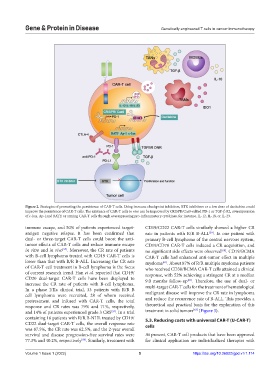
            Figure 2. Strategies of promoting the persistence of CAR-T cells. Using immune checkpoint inhibitors, BTK inhibitors or a low dose of decitabine could
            improve the persistence of CAR-T cells. The existence of CAR-T cells in vivo can be improved by CRISPR/Cas9-edited PD-1 or TGF-β R2, overexpression
            of c-Jun, Ap-1and BATF, or arming CAR-T cells through overexpressing pro-inflammatory cytokines, for instance, IL-12, IL-18, or IL-23.

            immune escape, and 50% of patients experienced target-  CD19/CD22 CAR-T cells similarly showed a higher CR
            antigen negative relapse.  It has been confirmed that   rate in patients with R/R B-ALL . In one patient with
                                                                                          [59]
            dual-  or three-target CAR-T cells could boost the anti-  primary B-cell lymphoma of the central nervous system,
            tumor effects of CAR-T cells and reduce immune escape   CD19/CD70 CAR-T cells induced a CR acquisition, and
            in vitro and in vivo . Moreover, the CR rate of patients   no significant side effects were observed . CD19/BCMA
                            [57]
                                                                                               [60]
            with B-cell lymphoma treated with CD19 CAR-T cells is   CAR-T cells had enhanced anti-tumor effect in multiple
            lower than that with R/R B-ALL. Increasing the CR rate   myeloma . About 87% of R/R multiple myeloma patients
                                                                      [61]
            of CAR-T cell treatment in B-cell lymphoma is the focus   who received CD38/BCMA CAR-T cells attained a clinical
            of current research trend. Han et al. reported that CD19/  response, with 52% achieving a stringent CR at a median
            CD20 dual-target CAR-T cells have been displayed to   9.0  months follow-up . Therefore, the use of dual-  or
                                                                                 [62]
            increase  the  CR  rate of  patients with B-cell lymphoma.   multi-target CAR-T cells for the treatment of hematological
            In a phase I/IIa clinical trial, 33  patients with R/R B
            cell lymphoma were recruited, 28 of whom received   malignant disease will improve the CR rate in lymphoma
            pretreatment and infused with CAR-T cells, the total   and reduce the recurrence rate of B-ALL. This provides a
            response and CR rates was 79% and 71%, respectively,   theoretical and practical basis for the exploration of this
                                                                                   [63]
            and 14% of patients experienced grade 3 CRS . In a trial   treatment in solid tumors  (Figure 3).
                                                [57]
            containing 16 patients with R/R B-NHL treated by CD19/  5.3. Reducing costs with universal CAR-T (U-CAR-T)
            CD22 dual-target CAR-T cells, the overall response rate   cells
            was 87.5%, the CR rate was 62.5%, and the 2-year overall
            survival and disease progression-free survival rates were   At present, CAR-T cell products that have been approved
            77.3% and 40.2%, respectively . Similarly, treatment with   for clinical application are individualized therapies with
                                    [58]
            Volume 1 Issue 1 (2022)                         5                      https://doi.org/10.36922/gpd.v1i1.114

