


Page 28 - GPD-2-2
P. 28
Gene & Protein in Disease                                         Hematoma clearance by microglia after ICH


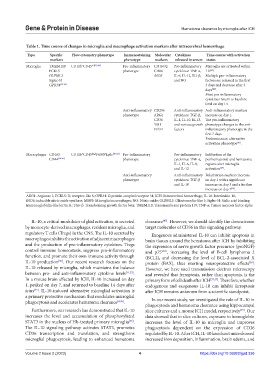
            Table 1. Time course of changes in microglia and macrophage activation markers after intracerebral hemorrhage
             Type     Specific   Flow cytometry phenotype  Immunostaining  Molecular  Cytokines   Time course with activation
                      markers                         phenotype    markers  released in serum status
            Microglia  TMEM119  CD11b CD45 int[19,20]  Pro-inflammatory  CD16/32  Pro-inflammatory  Microglia are activated within
                                    +
                      FCRLS                          phenotype     CD86    cytokines: TNF-α,  1 h .
                                                                                          [42]
                      OLFML3                                       iNOS    IL-6, IL-12, IL1-β,  Multiple pro-inflammatory
                      Siglec-H                                             and NO       factors are released in the first
                      GPR34 [32-34]                                                     3 days and decrease after 3
                                                                                        days .
                                                                                           [24]
                                                                                        Most pro-inflammatory
                                                                                        cytokines return to baseline
                                                                                        level on day 14.
                                                     Anti-inflammatory  CD206  Anti-inflammatory  Anti-inflammatory markers
                                                     phenotype     ARG1    cytokines: TGF-β,  increase on day 1.
                                                                   CD36    IL-4, IL-10, IL-13,  The pro-inflammatory
                                                                   YM1     and various growth  phenotype changes to the anti-
                                                                   FIZZ1   factors      inflammatory phenotype in the
                                                                                        first 7 days.
                                                                                        Predominance: alternative
                                                                                        activation phenotype .
                                                                                                      [43]
            Macrophages CD163  CD11b CD45 high F4/80 Ly6c [19-21]  Pro-inflammatory   Pro-inflammatory  Infiltration of the
                                    +
                                              +
                      CD44 [34-36]                   phenotype             cytokines: TNF-α,  perihematomal and hematoma
                                                                           IL-1, IL-6, IL-8,   regions after microglia
                                                                           and IL-12    activation .
                                                                                               [24]
                                                     Anti-inflammatory     Anti-inflammatory  Polarization markers increase
                                                     phenotype             cytokines: TGF-β   on day 1 with a significant
                                                                           and IL-10    increase on day 3 and a further
                                                                                                   [19]
                                                                                        increase on day 7 .
            ARG1: Arginase 1; FCRLS: Fc receptor-like S; GPR34: G protein-coupled receptor 34; ICH: Intracerebral hemorrhage; IL-10: Interleukin 10;
            iNOS: inducible nitric oxide synthase; MMΦ: Microglia/macrophages; NO: Nitric oxide; OLFML3: Olfactomedin-like 3; Siglec-H: Sialic acid binding
            immunoglobulin-like lectin H; TGF-β: Transforming growth factor beta; TMEM119: Transmembrane protein 119; TNF-α: Tumor necrosis factor alpha


              IL-10, a critical modulator of glial activation, is secreted   clearance . However, we should identify the downstream
                                                                      [45]
            by monocyte-derived macrophages, resident microglia, and   target molecules of CD36 in this signaling pathway.
            regulatory T cells (Tregs) in the CNS. The IL-10 secreted by   Exogenous administered IL-10 can inhibit apoptosis in
            macrophages inhibits the activation of adjacent macrophages   brain tissues around the hematoma after ICH by inhibiting
            and the production of pro-inflammatory cytokines. Tregs   the expression of nerve growth factor precursor (proNGF)
            control immune homeostasis, suppress pro-inflammatory   and p75 NTR , increasing the level of B-cell lymphoma 2
            function, and promote their own immune activity through   (BCL2), and decreasing the level of BCL-2-associated X
            IL-10 production . Our recent research focuses on the   protein (BAX), thus exerting neuroprotective effects .
                          [55]
                                                                                                           [56]
            IL-10 released by microglia, which maintains the balance   However, we have used transmission electron microscopy
            between pro-  and anti-inflammatory cytokine levels [11,23] .   and revealed that ferroptosis, rather than apoptosis, is the
            In a mouse brain affected by ICH, IL-10 increased on day   primary form of cell death after ICH [37,57] . Therefore, whether
            1, peaked on day 7, and returned to baseline 14 days after   endogenous and exogenous IL-10 can inhibit ferroptosis
            ictus . IL-10-induced alternative microglial activation is   after ICH remains unknown from a scientific standpoint.
                [45]
            a primary protective mechanism that modulates microglial
            phagocytosis and accelerates hematoma clearance [8,26] .  In our recent study, we investigated the role of IL-10 in
                                                               phagocytosis and hematoma clearance using hippocampal
              Furthermore, our research has demonstrated that IL-10   slice cultures and a mouse ICH model, respectively . Our
                                                                                                       [45]
            increases the level and accumulation of phosphorylated   data showed that in slice cultures, exposure to hemoglobin
            STAT3 in the nucleus of Hb-treated primary microglia .   increases the level of IL-10 in microglia and improves
                                                        [45]
            The IL-10 signaling pathway activates STAT3, promotes   phagocytosis dependent on the expression of CD36
            CD36  transcription  and  translation,  and  strengthens   regulated by IL-10. After ICH, IL-10 knockout mice showed
            microglial phagocytosis, leading to enhanced hematoma   increased iron deposition, inflammation, brain edema, and


            Volume 2 Issue 2 (2023)                         4                         https://doi.org/10.36922/gpd.336

