


Page 58 - GPD-2-2
P. 58
Gene & Protein in Disease                                                Transfection methods for TK6 cells


            reagent/DNA ratio of 3:1 when 1.0 µg of DNA is utilized   A
            for transfection; no significant difference in transfection
            efficiency and cell viability was observed between 24 and
            36 h transfection times.
              The experiment performed in Figure 1 was repeated by
            utilizing the best transfection conditions (reagent to DNA
            ratio of 3, 1 µg of DNA) obtained for the Metafectene Pro
            reagent. Cell viability and transfection efficiency were
            then assessed using  GFP and NanoLuciferase  activity
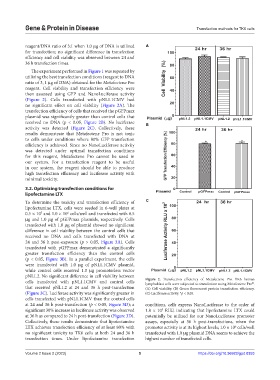
            (Figure  2). Cells transfected with pNL1.1CMV had
            no significant effect on cell viability (Figure  2A). The
            transfection efficiency of cells that received the pGFPmax
            plasmid was significantly greater than control cells that
            received no DNA (p  < 0.05,  Figure  2B). No luciferase   B
            activity  was  detected (Figure  2C). Collectively,  these
            results demonstrate that Metafectene Pro is not toxic
            to cells under conditions where 80% GFP transfection
            efficiency is achieved. Since no NanoLuciferase activity
            was detected under optimal transfection conditions
            for this reagent, Metafectene Pro cannot be used in
            our  system. For  a transfection reagent  to be useful
            in our system, the reagent should be able to produce
            high transfection efficiency  and  luciferase activity with
            minimal toxicity.
            3.2. Optimizing transfection conditions for
            lipofectamine LTX
            To determine the toxicity and transfection efficiency of   C
            lipofectamine LTX, cells were seeded in 6-well plates at
            0.5 × 10  and 1.0 × 10  cells/well and transfected with 0.5
                  5
                              6
            µg and 1.0 µg of pGFPmax plasmids, respectively. Cells
            transfected with 1.0 µg of plasmid showed no significant
            difference in cell viability between the control cells that
            received no DNA and cells transfected with DNA at
            24 and 36  h post-exposure (p  > 0.05,  Figure  3A). Cells
            transfected with pGFPmax demonstrated a significantly
            greater transfection efficiency than the control cells
            (p < 0.05, Figure 3B). In a parallel experiment, the cells
            were transfected  with 1.0  µg of  pNL1.1CMV plasmid,
            while control cells received 1.0  µg promoterless vector
            pNL1.2. No significant difference in cell viability between
            cells transfected with pNL1.1CMV and control cells   Figure  2. Transfection efficiency of Metafectene Pro. TK6 human
                                                               lymphoblast cells were subjected to transfection using Metafectene Pro .
                                                                                                            ®
            that received pNL1.2 at 24 and 36  h post-transfection   (A) Cell viability. (B) Green fluorescent protein transfection efficiency.
            (Figure 3C). Luciferase activity was significantly greater in   (C) Luciferase activity. *p < 0.05.
            cells transfected with pNL1.1CMV than the control cells
            at 24 and 36 h post-transfection (p < 0.05, Figure 3D); a   conditions, cells express NanoLuciferase to the order of
            significant 30% increase in luciferase activity was observed   1.8  ×  10   RLU,  indicating  that  lipofectamine  LTX  could
                                                                      5
            at 36 h as compared to 24 h post-transfection (Figure 3D).   potentially be utilized for our NanoLuciferase promoter
            Collectively, these results demonstrate that lipofectamine   assays, especially at 36  h post-transfections, when the
            LTX achieves transfection efficiency of at least 80% with   promoter activity is at its highest levels; 1.0 × 10  cells/well
                                                                                                     6
            no significant toxicity to TK6  cells at both 24 and 36  h   transfected with 1.0 µg plasmid DNA seems to achieve the
            transfection times.  Under lipofectamine transfection   highest number of transfected cells.


            Volume 2 Issue 2 (2023)                         5                        https://doi.org/10.36922/gpd.0353

