


Page 60 - GPD-2-2
P. 60
Gene & Protein in Disease                                                Transfection methods for TK6 cells


            A                                                  A


            B

                                                               B


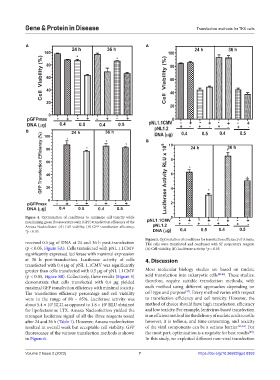
            Figure  4. Optimization of conditions to minimize cell toxicity while
            maximizing green fluorescent protein (GFP) transfection efficiency of the
            Amaxa Nucleofector. (A) Cell viability. (B) GFP transfection efficiency.
            *p < 0.05.
                                                               Figure 5. Optimization of conditions for transfection efficiency of Amaxa.
            received 0.5 µg of DNA at 24 and 36 h post-transfection   TK6 cells were transfected and combined with SF proprietary reagent.
            (p < 0.05, Figure 5A). Cells transfected with pNL 1.1CMV   (A) Cell viability. (B) Luciferase activity. *p < 0.05.
            significantly expressed luciferase with maximal expression
            at  36  h  post-transfection.  Luciferase  activity  of  cells   4. Discussion
            transfected with 0.4 µg of pNL 1.1CMV was significantly
            greater than cells transfected with 0.5 µg of pNL 1.1CMV   Most molecular biology studies are based on nucleic
            (p < 0.05, Figure 5B). Collectively, these results (Figure 5)   acid transfection into eukaryotic cells [45,46] . These studies,
            demonstrate that cells transfected with 0.4  µg yielded   therefore, require suitable transfection methods, with
            maximal GFP transfection efficiency with minimal toxicity.   each method using different approaches depending on
                                                                                [47]
            The transfection efficiency percentage and cell viability   cell type and purpose . Every method varies with respect
            were in the range of 80 – 85%. Luciferase activity was   to transfection efficiency and cell toxicity. However, the
            about 5.4 × 10  RLU, as opposed to 1.8 × 10  RLU obtained   method of choice should have high transfection efficiency
                                              5
                       5
            for lipofectamine LTX. Amaxa Nucleofection yielded the   and low toxicity. For example, lentivirus-based transfection
            strongest luciferase signal of all the three reagents tested   is an efficient method for the delivery of nucleic acids to cells;
            after 24 and 36 h (Table 1). However, Amaxa nucleofection   however, it is tedious, and time-consuming, and toxicity
            resulted in overall weak but acceptable cell viability. GFP   of the viral components can be a serious barrier [13,14] . For
            fluorescence of the various transfection methods is shown   the most part, optimization is a requisite for best results .
                                                                                                           [48]
            in Figure 6.                                       In this study, we exploited different non-viral transfection

            Volume 2 Issue 2 (2023)                         7                        https://doi.org/10.36922/gpd.0353

