


Page 24 - GTM-2-2
P. 24
Global Translational Medicine                                     Use of cardio biomarker in diagnosis of AMI


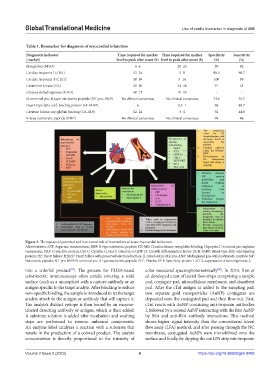
            Table 1. Biomarker for diagnosis of myocardial infarction
            Diagnostic indicator                   Time required for marker  Time required for marker   Specificity    Sensitivity
            (marker)                               level to peak after onset (h) level to peak after onset (h)  (%)  (%)
            Myoglobin (MYO)                               4–6                20–25          80         92
            Cardiac troponin I (cTnI)                     12–24              5–9            98.4      98.7
            Cardiac troponin T (cTnT)                     18–36              5–14           100        99
            Creatinine kinase (CK)                        20–30              24–48          91         24
            Glucose dehydrogenase (GDH)                   48–72              10–15           -          -
            N-terminal pro-B-type natriuretic peptide (NT-pro-BNP)  No clinical consensus  No clinical consensus  72.6  50.7
            Heart-type fatty acid-binding protein (H-FABP)  6                0.5–1          68        89.7
            Creatine kinase-myoglobin binding (CK-MB)     12–24              3–4            92        44.8
            B-type natriuretic peptide (BNP)         No clinical consensus  No clinical consensus  90  86


            Figure 2. Therapeutical potential and functional role of biomarkers of acute myocardial infarction.
            Abbreviations: AST: Aspartate transaminase; BNP: B-type natriuretic peptide; CK-MB: Creatine kinase-myoglobin binding; Copeptin: C-terminal pro-arginine
            vasopressin; CRP: C-reactive protein; Cys-C: Cystatin C; Gal-3: Galectin-3; GDF-15: Growth differentiation factor-15; H-FABP: Heart-type fatty acid-binding
            protein; HF: Heart failure; HFpEF: Heart failure with preserved ejection fraction; IL: Interleukin; MR-pro-ANP: Midregional pro-atrial natriuretic peptide; NP:
            Natriuretic peptide; NT-pro-BNP: N-terminal pro-B-type natriuretic peptide; PLT: Platelet; SP-1: Specificity protein 1; ST-2: suppression of tumorigenicity 2.
            into a colorful product . The process for ELISA-based   color measured spectrophotometrically . In 2010, Kim  et
                                                                                             [58]
                               [57]
            colorimetric immunoassays  often entails covering a solid   al. developed a test of lateral flow strips comprising a sample
            surface (such as a microplate) with a capture antibody or an   pad, conjugate pad, nitrocellulose membrane, and absorbent
            antigen specific to the target analyte. After blocking to reduce   pad. After the cTnl antigen is added to the sampling pad,
            non-specific binding, the sample is introduced to let the target   two separate gold nanoparticles (AuNP) conjugates are
            analyte attach to the antigen or antibody that will capture it.   deposited onto the conjugated pad and then flow out. First,
            The analyte’s distinct epitope is then bound by an enzyme-  cTnI reacts with AuNP containing anti-troponin antibodies
            labeled detecting antibody or antigen, which is then added.   I, followed by a second AuNP interacting with the first AuNP
            A substrate solution is added after incubation and washing   by BSA and anti-BSA antibody interactions. This method
            steps are performed to remove unbound components.   shows  higher  signal  intensity  than  the  conventional  lateral
            An enzyme label catalyzes a reaction with a substrate that   flow assay (LFA) method, and after passing through the NC
            results in the production of a colored product. The analyte   membrane, conjugated AuNPs were immobilized onto the
            concentration is directly proportional to the intensity of   surface and finally, by dipping the cut LFA strip into troponin


            Volume 2 Issue 2 (2023)                         6                        https://doi.org/10.36922/gtm.0403

