


Page 96 - GTM-3-3
P. 96
Global Translational Medicine                                                 SLE patient underwent PD


                         A


                         B


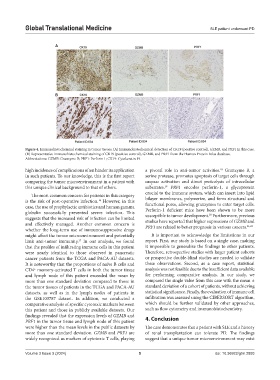
            Figure 4. Immunohistochemical staining in tumor tissues. (A) Immunohistochemical detection of CK19 (positive control), GZMB, and PRF1 in this case.
            (B) Representative immunohistochemical staining of CK19 (positive control), GZMB, and PRF1 from the Human Protein Atlas database.
            Abbreviations: GZMB: Granzyme B; PRF1: Perforin 1; CK19: Cytokeratin 19.
            high incidence of complications often hinder its application   a  pivotal  role in anti-tumor activities.  Granzyme B, a
                                                                                               18
            in such patients. To our knowledge, this is the first report   serine protease, promotes apoptosis of target cells through
            comparing the tumor microenvironment in a patient with   caspase  activation and  direct proteolysis of  intracellular
            this unique clinical background to that of others.  substrates.   PRF1 encodes perforin-1, a glycoprotein
                                                                       19
                                                               crucial to the immune system, which can insert into lipid
              The most common concern for patients in this category
            is the risk of post-operative infection.  However, in this   bilayer membranes, polymerize, and form structural and
                                           16
                                                               functional pores, allowing granzymes to enter target cells.
            case, the use of prophylactic antibiotics and human gamma   Perforin-1  deficient  mice  have  been  shown  to  be  more
            globulin  successfully  prevented  severe  infection.  This   susceptible to tumor development.  Furthermore, previous
                                                                                          20
            suggests that the increased risk of infection can be limited
            and effectively managed. Another common concern is   studies have reported that higher expressions of GZMB and
                                                                                                          21,22
            whether the long-term use of immunosuppressive drugs   PRF1 are related to better prognosis in various cancers.
            might affect the tumor microenvironment and potentially   It is important to acknowledge the limitations in our
            limit anti-tumor immunity.  In our analysis, we found   report. First, our study is based on a single case, making
                                  17
            that the profiles of infiltrating immune cells in this patient   it impossible to generalize the findings to other patients.
            were nearly identical to those observed in pancreatic   Therefore, retrospective studies with larger patient cohorts
            cancer patients from the TCGA and PACA-AU datasets.   or prospective double-blind studies are needed to validate
            It is noteworthy that the proportions of naïve B cells and   these observations. Second, as a case report, statistical
            CD4  memory-activated T cells in both the tumor tissue   analysis was not feasible due to the insufficient data available
                +
            and  lymph  node  of  this  patient  exceeded  the  mean  by   for performing comparative analysis. In our study, we
            more than one standard deviation compared to those in   compared the single value from this case with the mean ±
            the tumor tissues of patients in the TCGA and PACA-AU   standard deviation of a cohort of patients, without achieving
            datasets, as well as in the lymph nodes of patients in   statistical significance. Finally, the evaluation of immune cell
            the GSE103787 dataset. In addition, we conducted a   infiltration was assessed using the CIBERSORT algorithm,
            comparative analysis of specific cytotoxic markers between   which should be further validated by other approaches,
            this patient and those in publicly available datasets. Our   such as flow cytometry and immunohistochemistry.
            findings revealed that the expression levels of GZMB and
            PRF1 in the tumor tissue and lymph node of this patient   4. Conclusion
            were higher than the mean levels in the public datasets by   The case demonstrates that a patient with SLE and a history
            more than one standard deviation. GZMB and PRF1 are   of renal transplantation can tolerate  PD. The findings
            widely recognized as markers of cytotoxic T cells, playing   suggest that a unique tumor microenvironment may exist


            Volume 3 Issue 3 (2024)                         5                               doi: 10.36922/gtm.2893

