


Page 93 - GTM-3-3
P. 93
Global Translational Medicine                                                 SLE patient underwent PD


            pancreatic cancers, and lung cancers, with a 3- to 4-fold   and low levels of C3 and C4 complement proteins. In
            increase in risk.  A meta-analysis also demonstrated   2018, due to progressively worsening renal function, he
                          2,3
            that SLE patients have an increased risk of pancreatic   underwent renal transplantation. Post-transplant, he was
            cancer (hazard ratio = 1.42, 95% confidence interval =   maintained  on  triple  immunosuppressive  therapy  with
            1.32 – 1.53).  Furthermore, 10 – 20% of SLE patients may   tacrolimus, mycophenolate mofetil, and low-dose daily
                      4
            progress to end-stage renal disease, necessitating renal   prednisone. Over the past year, his immunosuppressive
            transplantation.  In addition, several studies suggest that   regimen was reduced to tacrolimus (2  mg BID) and
                        5
            cancer occurrence is related to renal transplantation.    mycophenolate mofetil (750 mg BID). His last tacrolimus
                                                          6
            Therefore, SLE patients who have undergone renal   blood concentration, measured in September 2022, was
            transplantation have an increased incidence of cancer. This   within the therapeutic range at 5.75  ng/mL. The serum
            increased risk is attributed to a range of factors, the most   creatinine level was 71  μmol/L at admission. Given
            important of which may be the adverse effects of long-term   the patient’s presentation with obstructive jaundice
            immunosuppressive medications.  These medications,   (serum total bilirubin level = 350 μmol/L), percutaneous
                                        3
            such as azathioprine and cyclosporin, can impair DNA   transhepatic cholecystostomy was performed on the 1  day
                                                                                                         st
            repair and activate oncogenic pathways. 7          of admission.
              Pancreatic cancer is ranked as one of the most lethal   The patient underwent PD combined with resection and
            and aggressive cancers, with a 5-year survival rate of only   reconstruction of the superior mesenteric vein in December
            10% in 2020.  The poor prognosis is attributed to its rapid   2022. Immunosuppressive drugs were discontinued on
                      8
            progression, early metastasis, and the lack of obvious   the day of the procedure (Figure  2). Given the patient’s
            clinical symptoms or sensitive screening approaches   immunocompromised  state,  piperacillin–tazobactam
            for early-stage detection. Previous studies have shown   was  administered  as  a  post-operative  anti-infective
            that SLE is closely associated with an increased risk of   prophylaxis regimen for 6 days, along with human gamma
            pancreatic cancer.  Radical resection remains the most   globulin (10  g IV, QD) for 5  days. Immunosuppressive
                           4
            effective treatment option for pancreatic cancer. However,
            due to the complexity of pancreaticoduodenectomy (PD),
            there is controversy over whether PD is safe for SLE
            patients who have undergone renal transplantation. This
            case study describes a PD performed for pancreatic cancer
            in a 44-year-old male with SLE and a history of renal
            transplantation. Our case demonstrates the feasibility of
            performing a PD in SLE patients who have undergone
            renal transplantation and, for the 1   time, reveals the
                                          st
            changes in the immune microenvironment through
            in silico analysis.
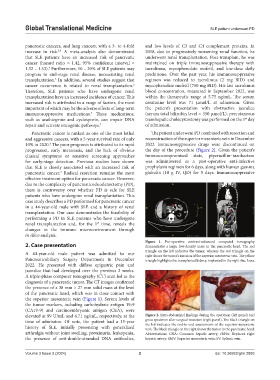
                                                               Figure  1. Pre-operative contrast-enhanced computed tomography
            2. Case presentation                               demonstrates a large, low-density mass in the pancreatic head. The red
            A 44-year-old male patient was admitted to our     triangle on the left indicates the tumor, whereas the red triangle on the
                                                               right shows the tumor’s invasion of the superior mesenteric vein. The yellow
            Pancreaticobiliary Surgery Department in December   triangle highlights the transplanted kidney, implanted in the right iliac fossa.
            2022. He presented with diffuse epigastric pain and
            jaundice that had developed over the previous 2  weeks.
            A triple-phase computer tomography (CT) scan led to the
            diagnosis of a pancreatic tumor. The CT images confirmed
            the presence of a 38 mm × 27 mm solid mass at the level
            of  the  pancreatic  head,  which  was  in  close  contact  with
            the superior mesenteric vein (Figure 1). Serum levels of
            the tumor markers, including carbohydrate antigen 19-9
            (CA19-9) and carcinoembryonic antigen (CEA), were
            elevated at 99 U/mL and 6.71 ng/mL, respectively, at the   Figure 2. Intra-abdominal findings during the operation (left panel) and
            time of admission. Of note, the patient had a 15-year   gross specimen after surgical resection (right panel). The black triangle on
                                                               the left indicates the end-to-end anastomosis of the superior mesenteric
            history of SLE, initially presenting with generalized   vein. The black triangle on the right shows the tumor in the pancreatic head.
            arthralgia without joint swelling, proteinuria, leukopenia,   Abbreviations: CHA: Common hepatic artery; rRHA: Replaced right
            the presence of anti-double-stranded DNA antibodies,   hepatic artery; SMV: Superior mesenteric vein; SV: Splenic vein.


            Volume 3 Issue 3 (2024)                         2                               doi: 10.36922/gtm.2893

