


Page 101 - GTM-3-3
P. 101
Global Translational Medicine                                  Rheumatoid nodule versus fibrocaseous tubercle


            A                      B                           A                       B


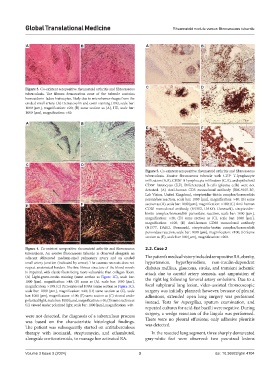
            Figure 3. Co-existent seropositive rheumatoid arthritis and fibrocaseous   C  D
            tuberculosis. The fibrous demarcation zone of the tubercle contains
            hemosiderin-laden histiocytes, likely due to microhemorrhages from the
            eroded small artery. (A) Hematoxylin and eosin staining (HE), scale bar:
            1000 [µm], magnification: ×20; (B) same section as (A), HE, scale bar:
            1000 [µm], magnification: ×40.

            A                      B
                                                               E                       F


            C                      D
                                                               Figure 5. Co-existent seropositive rheumatoid arthritis and fibrocaseous
                                                               tuberculosis.  Erosive  fibrocaseous  tubercle  with  CD3   T-lymphocyte
                                                                                                   +
                                                               infiltration (A,B), CD20  B-lymphocyte infiltration (C,D), and epithelioid
                                                                              +
                                                               CD68  histiocytes (E,F). Differentiated B-cells (plasma cells) were not
                                                                   +
                                                               detected. (A) Anti-human CD3 monoclonal antibody (RM-9107-R7,
                                                               Lab Vision, United Kingdom), streptavidin-biotin complex/horseradish
                                                               peroxidase reaction, scale bar: 1000 [µm], magnification: ×40; (B) same
            E                      F                           section as (A), scale bar: 1000 [µm], magnification: ×100; (C) Anti-human
                                                               CD20 monoclonal antibody (N1502, DAKO, Denmark), streptavidin-
                                                               biotin  complex/horseradish  peroxidase  reaction,  scale  bar:  1000  [µm],
                                                               magnification: ×40; (D) same section as (C), scale bar: 1000  [µm],
                                                               magnification: ×100; (E) Anti-human CD68 monoclonal antibody
                                                               (N1577, DAKO,  Denmark), streptavidin-biotin complex/horseradish
                                                               peroxidase reaction, scale bar: 1000 [µm], magnification: ×100; (F) Same
                                                               section as (E), scale bar: 100 [µm], magnification: ×200.

            Figure  4. Co-existent seropositive rheumatoid arthritis and fibrocaseous   2.2. Case 2
            tuberculosis. An erosive fibrocaseous tubercle is observed alongside an
            adjacent obliterated medium-sized pulmonary artery and an eroded   The patient’s medical history included seropositive RA, obesity,
            small artery junction (indicated by arrow). The caseous necrosis does not   hypertension,  hypothyroidism,  non-insulin-dependent
            respect anatomical borders. The fine fibrous structure of the blood vessels   diabetes mellitus, glaucoma, stroke, and transient ischemic
            is impaired, with elastic fibers being more vulnerable than collagen fibers.   attack due to carotid artery stenosis, and amputation of
            (A) Light-green-orcein staining (same section as  Figure  1C), scale bar:   the right leg following femoral artery embolism. Due to a
            1000 [µm], magnification: ×40; (B) same as (A), scale bar: 1000  [µm],
            magnification: ×100; (C) Picrosirius red F3BA (same section as Figure 1C),   focal  subpleural  lung  lesion,  video-assisted  thoracoscopic
            scale bar: 1000 [µm], magnification: ×40; (D) same section as (C), scale   surgery was initially planned; however, because of pleural
            bar: 1000 [µm], magnification: ×100; (E) same section as (C) viewed under   adhesions, extended open  lung  surgery  was performed
            polarized light, scale bar: 1000 [µm], magnification: ×40; (F) same section as   instead. Tests for  Aspergillus, sputum examination, and
            (C) viewed under polarized light, scale bar: 1000 [µm], magnification: ×40.
                                                               repeated cultures for acid-fast bacilli were negative. During
                                                               surgery, a wedge resection of the lingula was performed.
            were not detected, the diagnosis of a tuberculous process
            was based on the characteristic histological findings.   There were no pleural effusions; only adhesive pleuritis
            The patient was subsequently started on antituberculous   was detected.
            therapy with isoniazid, streptomycin, and ethambutol,   In the resected lung segment, three sharply demarcated
            alongside corticosteroids, to manage her activated RA.  gray-white foci were observed: two pea-sized lesions


            Volume 3 Issue 3 (2024)                         3                               doi: 10.36922/gtm.4104

