


Page 105 - GTM-3-3
P. 105
Global Translational Medicine                                  Rheumatoid nodule versus fibrocaseous tubercle


            A                      B                           distinction between fibrocaseous tuberculosis and RhNod
                                                               crucial in clinical practice. This case series illustrates the
                                                               histological differences between these two pathological
                                                               entities. The key histological sign for RhNod is the presence
                                                               of blood vessel remnants within the fibrinoid necrotic area,
                                                               reflecting its vascular origin. The detection of inflamed
                                                               blood vessels elsewhere in the lung, such as non-specific
            C                      D                           fibrinoid necrotic and/or granulomatous autoimmune
                                                               vasculitis, along with the possible co-existence of
                                                               interstitial pneumonitis (with or without pleuritis), further
                                                               supports the rheumatoid nature of the process. In contrast,
                                                               tuberculous necrosis is characterized by coalescent
                                                               necrosis that does not respect anatomical borders (without
                                                               structural remnants of the lung), which is a hallmark of the
                                                               tuberculous process.
            E                       F
                                                               Acknowledgments
                                                               None.

                                                               Funding
                                                               None.
            G                      H
                                                               Conflict of interest
                                                               The authors declare that they have no competing interests.

                                                               Author contributions
                                                               Conceptualization: Miklós Bély
                                                               Data curation: Ágnes Apáthy
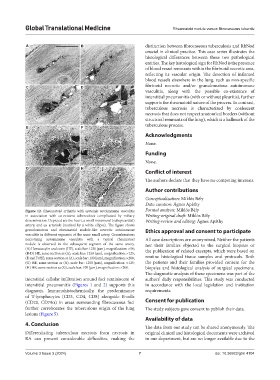
            Figure  12. Rheumatoid arthritis with systemic autoimmune vasculitis   Formal analysis: Miklós Bély
            in association with co-existent tuberculosis complicated by miliary   Writing-original draft: Miklós Bély
            dissemination. Depicted are the heart, a small intramural (subepicardial)   Writing-review and editing: Ágnes Apáthy
            artery, and an arteriole (marked by a white ellipse). The  figure shows
            granulomatous  and  rheumatoid  nodule-like  necrotic  autoimmune   Ethics approval and consent to participate
            vasculitis in different segments of the same small artery. Granulomatous
            necrotizing autoimmune vasculitis with a typical rheumatoid   All case descriptions are anonymized. Neither the patients
            nodule  is  observed  in  the  subsequent  segment  of  the  same  artery.   nor their families objected to the surgical biopsies or
            (A) Hematoxylin and eosin (HE), scale bar: 1250 [µm], magnification: ×50;   the publication of related excerpts, which were based on
            (B-D) HE, same section as (A), scale bar: 1250 [µm], magnification: ×125;
            (E and F) HE, same section as (A), scale bar: 100 [µm], magnification: ×200;   routine  histological  tissue  samples  and  protocols.  Both
            (G) HE, same section as (A), scale bar: 1250 [µm], magnification: ×125;   the patients and their families provided consent for the
            (H) HE, same section as (G), scale bar: 100 [µm], magnification: ×200.   biopsies and histological analysis of surgical specimens.
                                                               The diagnostic analysis of these specimens was part of the
            interstitial cellular infiltration around foci reminiscent of   authors’ daily responsibilities. This study was conducted
            interstitial pneumonitis (Figures  1  and  2) supports this   in accordance with the local legislation and institution
            diagnosis. Immunohistochemically, the predominance   requirements.
            of T-lymphocytes (CD3, CD4, CD8) alongside B-cells
            (CD20, CD79α) in areas surrounding fibrocaseous foci   Consent for publication
            further corroborates the tuberculous origin of the lung   The study subjects gave consent to publish their data.
            lesions (Figure 5).
                                                               Availability of data
            4. Conclusion
                                                               The data from our study can be shared anonymously. The
            Differentiating tuberculous necrosis from necrosis in   original clinical and histological documents were archived
            RA can present considerable difficulties, making the   in our department, but are no longer available due to the


            Volume 3 Issue 3 (2024)                         7                               doi: 10.36922/gtm.4104

