


Page 104 - GTM-3-3
P. 104
Global Translational Medicine                                  Rheumatoid nodule versus fibrocaseous tubercle


            A                       D                          derived lymphocytes (T-cells), with a normal proportion
                                                               of CD4 (OKT4 ) helper/inducer and CD8 (OKT8 )
                                                                             +
                                                                                                            +
                                                               suppressor/cytotoxic subpopulations. 20,22  The histology of
                                                               our patients aligns with the descriptions mentioned above.
                                                               Furthermore, we observed a moderate T-cell dominance
                                                               in  the  lymphoid  mantle  of  the  fibrocaseous  tubercle,
                                                               alongside B-cells, in contrast to the sparse (scattered)
            B                       E                          perinodal lymphoid infiltration of the RhNod, with no
                                                               differentiated plasma cells detected. The pathogenesis of
                                                               RhNods remains contentious. 18,20,21  Factors such as vascular
                                                               occlusion, neutrophil  involvement, immune complexes,
                                                               tissue lesions, and local complement activation due to
                                                               pressure and movement are thought to contribute to their
                                                               formation.
                                                                                23
            C                       F                            According to Ziff,  as quoted by Mohr, trauma and
                                                               microhemorrhages stimulate monocytes and macrophages,
                                                               which release immune complexes and various chemotactic
                                                               and toxic agents (e.g., proteinases, collagenases, cytotoxic
                                                               substances), resulting in necrosis surrounded by a cellular
                                                               demarcation zone. Sokoloff and Bunim  emphasized the
                                                                                               24
                                                               role of vasculitis in the pathogenesis of RhNods. Koizumi
                                                               et al.  described RhNods as the most severe form of
                                                                   25
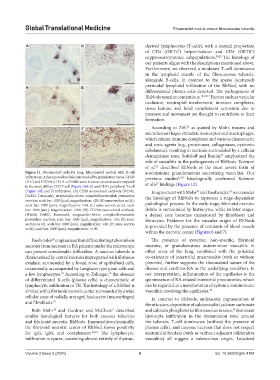
            Figure 11. Rheumatoid arthritis lung: Rheumatoid nodule with B-cell   autoimmune granulomatous necrotizing vasculitis. Our
            infiltration. A rheumatoid nodule surrounded by granulation tissue. CD20   previous studies 26,27  histologically confirmed Koizumi
            (A-C) and CD79α (D-F) B-cell infiltration is more concentrated compared   et al.’s  findings (Figure 12).
                                                                   25
            to the more diffuse CD3 T-cell (Figure 10A-C) and CD43 peripheral T-cell
            (Figure 10E and F) infiltration. (A) CD20 monoclonal antibody (N1502,   In agreement with Mohr  and Fassbender,  we consider
                                                                                     20
                                                                                                   18
            DAKO, Denmark), streptavidin-biotin complex/horseradish peroxidase   the histology of RhNods to represent a stage-dependent
            reaction, scale bar: 1000 [µm], magnification: ×20; (B) same section as (A),
            scale bar: 1000 [µm], magnification: ×40; (C) same section as (a), scale   pathological process. In the early stage, fibrinoid necrotic
            bar: 1000 [µm], magnification: ×100; (D) CD79α monoclonal antibody   debris is surrounded by histiocytes, while in later stages,
            (N1628, DAKO, Denmark), streptavidin-biotin complex/horseradish   a denser core becomes demarcated by fibroblasts and
            peroxidase reaction, scale bar: 1000 [µm], magnification: ×20; (E) same   fibrocytes. Evidence for the vascular origin of RhNods
            section as (d), scale bar: 1000 [µm], magnification: ×40; (F) same section   is provided by the presence of remnants of blood vessels
            as (E), scale bar: 1000 [µm], magnification: ×100.
                                                               within the necrotic center (Figures 6 and 7).
              Fassbender  emphasized that differentiating tuberculosis   The presence of systemic, non-specific, fibrinoid
                       18
            necrosis from necrosis in RA patients under the microscope   necrotic, or granulomatous autoimmune vasculitis in
            can present considerable difficulties. A caseous tubercle is   other  areas  of the  lung,  combined with the  potential
            characterized by central necrosis impregnated with fibrinous   co-existence of interstitial pneumonitis (with or without
            exudate, surrounded by a broad zone of epithelioid cells,   pleuritis), further supports the rheumatoid nature of the
            occasionally accompanied by Langhans-type giant cells and   disease and confirms RA as the underlying condition. In
            a few lymphocytes.  According to Zollinger,  the absence   our interpretation, inflammation of the capillaries is the
                           18
                                               19
            of differentiated B-cells (plasma cells) is characteristic of   quintessence of RA-related interstitial pneumonitis, which
            lymphocytic infiltration in TB. The histology of a RhNod is   can be regarded as a manifestation of systemic autoimmune
            similar, with a fibrinoid necrotic center surrounded by a wide   vasculitis involving the capillaries. 28
            cellular zone of radially arranged histiocytes (macrophages)   In contrast to RhNods, anthracotic pigmentation of
            and fibroblasts. 18                                fibrotic scars, deposition of calcium salts (calcium carbonate
              Both Mohr  and Gardner and McClure  described    and calcium phosphate) in fibrocaseous masses,  dominant
                                                21
                                                                                                    29
                        20
            similar histological features for both caseous tubercles   histiocyte infiltration in the demarcation zone around
            and fibrinoid necrotic RhNods. Immunohistochemically,   the tubercle, T-cell dominance (without the presence of
            the fibrinoid necrotic center of RhNod shows positivity   plasma cells), and caseous necrosis that does not respect
            for IgG, IgM, and complement. 20,21  The lymphocytic   anatomical borders (with or without adjacent obliterative
            infiltration is sparse, consisting almost entirely of thymus-  vasculitis) all suggest a tuberculous origin. Localized

            Volume 3 Issue 3 (2024)                         6                               doi: 10.36922/gtm.4104

