


Page 25 - IJAMD-1-1
P. 25
International Journal of AI
            for Material and Design                                               ML in 3D bioprinting of cultivated meat


                         A                                     B


                         C


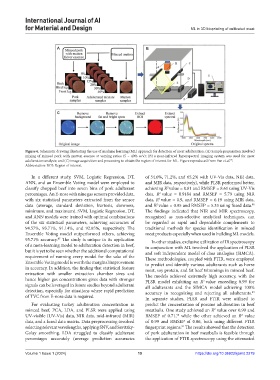
            Figure 6. Schematic drawing illustrating the use of machine learning (ML) approach for detection of meat adulteration: (A) Sample preparation involved
            mixing of minced pork with mutton essence at varying ratios (5 – 40% w/v); (B) a near-infrared hyperspectral imaging system was used for meat
            adulteration analysis; and (C) image acquisition and processing to obtain the region of interest for ML. Figure reproduced from Fan et al. .
                                                                                                   85
            Abbreviation: ROI: Region of interest.
              In a different study, SVM, Logistic Regression, DT,   of 54.6%, 71.2%, and 65.2% with UV-Vis data, NIR data,
            ANN, and an Ensemble Voting model were employed to   and MIR data, respectively), while PLSR performed better,
            classify chopped beef into seven bins of pork adulterant   achieving R value = 0.81 and RMSEP = 8.61 using UV-Vis
                                                                        2
                                                                     2
            percentages. An E-nose with nine gas sensors provided data,   data,  R value = 0.9184 and RMSEP = 5.79 using NIR
            with six statistical parameters extracted from the sensor   data, R value = 0.9, and RMSEP = 6.19 using MIR data,
                                                                     2
            data (average, standard deviation, kurtosis, skewness,   and R value = 0.95 and RMSEP = 5.33 using fused data.
                                                                    2
                                                                                                            88
            minimum, and maximum). SVM, Logistic Regression, DT,   The findings indicated that NIR and MIR spectroscopy,
            and ANN models were trained with optimal combinations   recognized  as  non-selective  analytical  techniques,  can
            of  the  six  statistical  parameters,  achieving  accuracies  of   be regarded as rapid and dependable complements to
            94.57%, 93.71%, 91.14%, and 92.85%, respectively. The   traditional methods for species identification in minced
            Ensemble Voting model outperformed others, achieving   meat products especially when used in building ML models.
            95.71% accuracy.  The study is unique in its application   In other studies, exclusive utilization of IR spectroscopy
                          87
            of a meta-learning model to adulteration detection in beef,   in conjunction with ML involved the application of PLSR
            but it is yet to be seen whether the additional computational   and soft independent model of class analogies (SIMCA).
            requirement of running every model for the sake of the   These methodologies, coupled with FTIR, were employed
            Ensemble Voting model is worth the marginal improvement   to predict and identify various adulterants such as horse
            in accuracy. In addition, the finding that statistical feature   meat, soy protein, and fat beef trimmings in minced beef.
            extraction with smaller extraction chamber sizes and   The models achieved extremely high accuracy, with the
            hence higher gas concentrations gives data with stronger   PLSR model exhibiting an  R value exceeding 0.99 for
                                                                                       2
            signals can be leveraged in future studies beyond adulterant   all adulterants and the SIMCA model achieving 100%
            detection, especially for situations where rapid prediction   accuracy in recognizing and rejecting all adulterants.
                                                                                                            89
            of TVC from E-nose data is required.               In separate studies, PLSR and FTIR were utilized to
              For evaluating turkey adulteration concentration in   predict the concentration of porcine adulteration in beef
            minced beef, PCA, LDA, and PLSR were applied using   meatballs. One study achieved an R  value over 0.99 and
                                                                                            2
                                                                                                        2
                                                                            90
            UV-visible (UV-Vis) data, NIR data, mid-infrared (MIR)   RMSEP of 0.71,  while the other achieved an  R  value
            data, and a fused data matrix. Data preprocessing involved   of 0.99 and RMSEP of 0.06, both using different FTIR
            selecting relevant wavelengths, applying SNV, and Savitzky-  fingerprint regions.  The results showed that the detection
                                                                              91
            Golay smoothing. LDA struggled to classify adulterant   of pork adulteration in beef meatballs is feasible through
            percentages accurately (average prediction accuracies   the application of FTIR spectroscopy using the attenuated
            Volume 1 Issue 1 (2024)                         19                      https://doi.org/10.36922/ijamd.2279

