


Page 55 - IJAMD-1-1
P. 55
International Journal of AI
            for Material and Design                                               Integrating physics data for DL in DED


            Subsequently, a total of 625 datasets were augmented   correlated with LP and sulfur content and negatively with
            through simulation data, forming the basis for pre-training   SS and PMFR. “b2” demonstrated a negative correlation
            the deep learning model. The output dataset consists of   with LP and sulfur content while correlating positively
            three coefficients representing the polynomial curve for   with SS and PMFR.
            deposition shape  and three coefficients  representing the   In the augmented experiment data presented in
            dilution polynomial curve.                         Figure  8, distinct correlations were observed. The bead
            2.3.2. Statistical analysis of data                coefficient “a0” exhibited a negative correlation with LP
                                                               and PMFR while showing a positive correlation with SS.
            In ML, the quality of the dataset significantly influences the   Meanwhile, the bead coefficient “a1” demonstrated negative
            performance of the ML model. Therefore, various datasets,   correlations with LP, SS, and PMFR. On the other hand,
            including augmented simulation, augmented experiment,   the bead coefficient “a2” displayed positive correlations
            simulation, and experimental, must be subjected to   with LP and PMFR. Turning to the dilution coefficients,
            correlation and outlier analysis to assess data quality before   both “b0” and “b1” exhibited weak negative correlations
            using it in training and testing.                  with LP and strong negative correlations with PMFR. The
              Analyzing the augmented simulation data (Figure  7)   dilution coefficient “b2” displayed a weak correlation with
            revealed specific correlations. The bead coefficient “a0”   LP and a strong correlation with SS.
            exhibited a positive correlation with LP and a negative   In  the simulation  data  (Figure  9),  “a0” exhibited  a
            correlation with SS and sulfur content. Given the symmetric   positive correlation with LP and a negative correlation
            curves used to describe the melt track under ideal conditions   with sulfur content and SS. Similarly, “a2” demonstrated a
            in both augmented simulation and simulation datasets,   positive correlation with PMFR and a negative correlation
            the bead coefficients “a1” and “b1” were not subjected   with SS. The dilution coefficient “b0” displayed positive
            to correlation analysis. The coefficient “a2” displayed a   correlations with LP and sulfur content while correlating
            positive correlation with PMFR and a negative correlation   negatively with SS and PMFR. Conversely, “b2” exhibited
            with SS. Meanwhile, the dilution coefficient “b0” positively   a negative correlation with LP and a positive correlation
                                                               with SS and PMFR.
            Table 1. Input parameters and output data collected from
            numerical simulation for the study of sulfur variation  In the experimental data (Figure  10), “a0” displayed
                                                               a positive correlation with SS and a negative correlation
            Input parameters    Levels    Output               with PMFR. In addition, “a2” demonstrated a positive
            LP (W)          1400  1600  1800 Melt pool contour   correlation with PMFR and a negative correlation with
            PMFR (g/min)     16   18  20  coordinates in (X, Y, Z)   SS. Examining the dilution coefficients, “b0” displayed a
                                          as shown in Figure 3  positive correlation with LP, while “b2” exhibited a negative
            SS (mm/min)     2000  2500  3000
            Sulfur content (wt%)  0.0005 0.004 0.015           correlation with LP and a positive correlation with SS.
            Abbreviations: LP: Laser power, PMFR: Powder mass flow rate,    In summary, the correlation patterns observed among
            SS: Scanning speed.                                the coefficients and factors such as LP, SS, sulfur content,


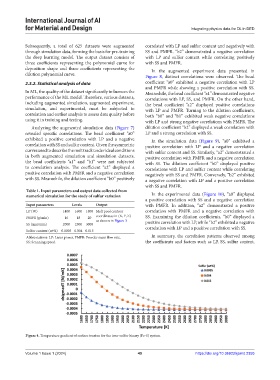
            Figure 4. Temperature gradient of surface tension for the iron-sulfur binary (Fe-S) system.


            Volume 1 Issue 1 (2024)                         49                      https://doi.org/10.36922/ijamd.2355

