


Page 60 - IJAMD-1-1
P. 60
International Journal of AI
            for Material and Design                                               Integrating physics data for DL in DED


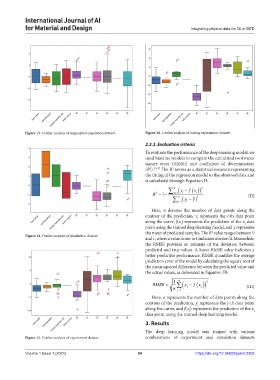
            Figure 13. Outlier analysis of augmented simulation dataset.  Figure 16. Outlier analysis of testing experiment dataset.

                                                               2.3.3. Evaluation criteria
                                                               To evaluate the performance of the deep learning model, we
                                                               used baseline models to compare the calculated root mean
                                                               square error (RMSE) and coefficient of determination
                                                               (R ).   The R  serves as a statistical measure representing
                                                                 2 33-37
                                                                          2
                                                               the fitting of the regression model to the observed data and
                                                               is calculated through Equation II:
                                                                                   ( ))
                                                                         ∑ n  ( y −  fx  2
                                                                  R = 1−   i= 1  i  i                      (II)
                                                                   2
                                                                          ∑  n i= 1 ( y −  ) y  2
                                                                                i
                                                                 Here,  n denotes the number of data points along the
                                                               contour of the prediction, y represents the i-th data point
                                                                                     i
                                                               along the curve, f(x) represents the prediction of the x data
                                                                                                         i
                                                                              i
                                                               point using the trained deep learning model, and ȳ represents
                                                               the mean of predicted samples. The R  value ranges between 0
                                                                                           2
            Figure 14. Outlier analysis of simulation dataset.
                                                               and 1, where a value closer to 1 indicates a better fit. Meanwhile,
                                                               the RMSE provides an estimate of the deviation between
                                                               predicted and true values. A lower RMSE value indicates a
                                                               better predictive performance. RMSE quantifies the average
                                                               prediction error of the model by calculating the square root of
                                                               the mean squared difference between the predicted value and
                                                               the actual values, as delineated in Equation III:
                                                                           1  n          2
                                                                                     ( ))
                                                                  RMSE =    ∑ ( y −  f x                  (III)
                                                                           n  j= 1  j  j
                                                                 Here, n represents the number of data points along the
                                                               contour of the prediction, y  represents the j-th data point
                                                                                     j
                                                               along the curve, and f(x ) represents the prediction of the x   j
                                                                                  i
                                                               data point using the trained deep learning model.
                                                               3. Results
                                                               The deep learning model was trained with various
            Figure 15. Outlier analysis of experiment dataset.  combinations  of  experiment  and  simulation  datasets


            Volume 1 Issue 1 (2024)                         54                      https://doi.org/10.36922/ijamd.2355

