


Page 65 - IJAMD-1-1
P. 65
International Journal of AI
            for Material and Design                                               Integrating physics data for DL in DED


                                                               Programme and the National Research Foundation, Prime
                                                               Minister’s  Office,  Singapore,  under  its  Medium-Sized
                                                               Centre funding scheme. In addition, this work receives
                                                               support from the Singapore Centre for 3D Printing at
                                                               Nanyang Technological University, Singapore, which
                                                               provides access to its AM facilities.

                                                               Conflict of interest
                                                               The authors declare that they have no known competing
                                                               financial interests or personal relationships that could have
                                                               appeared to influence the work reported in this paper.

                                                               Author contributions
                                                               Conceptualization:  Stanley  Jian  Liang  Wong,  Chengxi
                                                                  Chen, Hua Li
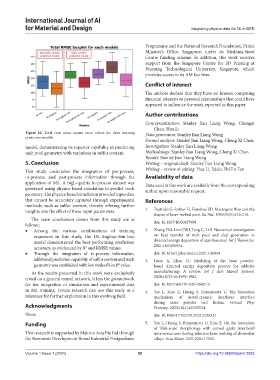
            Figure  22. Total root mean square error values for deep learning   Data generation: Stanley Jian Liang Wong
            prediction models.
                                                               Formal analysis: Stanley Jian Liang Wong, Cheng Xi Chen
            model, demonstrating its superior capability in predicting   Investigation: Stanley Jian Liang Wong
            melt pool geometry with variations in sulfur content.  Methodology: Stanley Jian Liang Wong, Cheng Xi Chen
                                                               Results: Stanley Jian Liang Wong
            5. Conclusion                                      Writing – original draft: Stanley Jian Liang Wong

            This study undertakes the integration of pre-process,   Writing – review & editing: Hua Li, Eddie Zhi’En Tan
            in-process, and post-process information through the   Availability of data
            application of ML. A high-quality in-process dataset was   Data used in this work are available from the corresponding
            generated using physics-based simulation to predict track   author upon reasonable request.
            geometry. The physics-based simulation provided input data
            that cannot be accurately captured through experimental   References
            methods, such as sulfur content, thereby offering further
            insights into the effect of these input parameters.  1.   Tsotridis G, Rother H, Hondros ED. Marangoni flow and the
                                                                  shapes of laser-melted pool. Sci Nat. 1989;76(5):216-218.
              The main conclusions drawn from this study are as      doi: 10.1007/BF00627691
            follows:
            •   Among the various combinations of training     2.   Zhang YM, Lim CWJ, Tang C, Li B. Numerical investigation
               sequences in this study, the DL-AugExp-Sim-Exp     on heat transfer of melt pool and clad generation in
               model demonstrated the best-performing prediction   directed energy deposition of stainless steel. Int J Therm Sci.
               accuracy, as evidenced by R  and RMSE values.      2021;165:106954.
                                     2
            •   Through the integration of in-process information,      doi: 10.1016/j.ijthermalsci.2021.106954
               additional prediction capability of sulfur content and track   3.   Guan X, Zhao YF. Modeling of the laser powder-
               geometry was established with low tradeoffs in R  value.  based directed energy deposition process for additive
                                                   2
              As the results presented in this work were exclusively   manufacturing: A  review.  Int J Adv Manuf Technol.
            tested on a general neural network, it lays the groundwork   2020;107(5-6):1959-1982.
            for the integration of simulation and experimental data      doi: 10.1007/s00170-020-05027-0
            in ML training. Future research can use this study as a   4.   Yao L, Xiao Z, Huang S, Ramamurty U. The formation
            reference for further exploration in this evolving field.  mechanism  of  metal-ceramic  interlayer  interface
                                                                  during laser powder bed fusion.  Virtual  Phys
            Acknowledgments                                       Prototyp. 2023;18(1):e2235324.
            None.                                                 doi: 10.1080/17452759.2023.2235324
            Funding                                            5.   Yao L, Huang S, Ramamurty U, Xiao Z. On the formation
                                                                  of ‘Fish-scale’ morphology with curved grain interfacial
            This research is supported by Makino Asia Pte Ltd through   microstructures during selective laser melting of dissimilar
            the Economic Development Board Industrial Postgraduate   alloys. Acta Mater. 2021;220:117331.


            Volume 1 Issue 1 (2024)                         59                      https://doi.org/10.36922/ijamd.2355

