


Page 16 - IJAMD-2-1
P. 16
International Journal of AI for
            Materials and Design
                                                                             Predicting thermal conductivity of sintered Ag


            In this study, image processing and modeling simulation   appropriate material properties to the current voxel block.
            of microstructure images were performed using      Since sintered nano-Ag is an isotropic material, distribution
            MATLAB and Ansys, respectively. The results from the   in the x-, y-, and z-directions are consistent. Therefore, 2D
            batch calculation of the thermal conductivity of sintered   models can be used to simulate the heat transfer behavior
            nano-Ag microstructures enhanced the understanding   of sintered nano-Ag, with microstructural characteristics.
            of the physical relationship between sintered nano-Ag   A plane model of nano-Ag and air was established, where
            microstructure and heat transfer properties.       the  thermal  conductivity  of  dense  nano-Ag  and  air  is  429
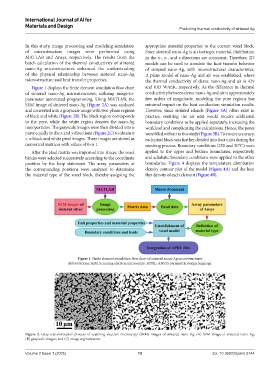
              Figure 1 displays the finite element simulation flow chart   and 0.03 W/mK, respectively. As the difference in thermal
            of sintered nano-Ag microstructures, utilizing image-to-  conductivity between dense nano-Ag and air is approximately
            parameter  automated  programming.  Using  MATLAB,  the   five orders of magnitude, modeling the pore regions has
            SEM image of sintered nano-Ag (Figure 2A) was analyzed   minimal impact on the heat conduction simulation results.
            and converted into a grayscale image with two-phase regions   However,  since isolated islands  (Figure  3A)  often exist in
            of black and white (Figure 2B). The black region corresponds   practice, omitting the air unit would require additional
            to  the  pore,  while  the  white  region  denotes  the  nano-Ag   boundary conditions to be applied separately, increasing the
            nanoparticles. The grayscale images were then divided into n   workload and complicating the calculations. Hence, the pores
            parts equally in the x and y directions (Figure 2C) to obtain n   were filled with air in this study (Figure 3B). To ensure accuracy,
            × n black and white pixel images. These images are stored as   each pixel block was further divided into four units during the
            numerical matrices with values of 0 or 1.          meshing process. Boundary conditions (250 and 50℃) were
              After the pixel matrix was imported into Ansys, the voxel   applied to the upper and bottom boundaries, respectively,
            blocks were selected successively according to the coordinate   and adiabatic boundary conditions were applied to the other
            position by the loop statement. The array parameters at   boundaries.  Figure  4 displays the temperature  distribution
            the corresponding positions were analyzed to determine   density contour plot of the model (Figure 4A) and the heat
            the material type of the voxel block, thereby assigning the   flux density of each element (Figure 4B).


                                  Figure 1. Finite element simulation flow chart of sintered nano-Ag microstructures
                              Abbreviations: SEM: Scanning electron microscopy; APDL: ANSYS parametric design language.

                         A                       B                        C


            Figure  2. Gray transformation process of scanning electron microscopy (SEM) images of sintered nano-Ag: (A) SEM image of sintered nano-Ag;
            (B) grayscale images; and (C) image segmentation.


            Volume 2 Issue 1 (2025)                         10                             doi: 10.36922/ijamd.5744

