


Page 19 - IJAMD-2-1
P. 19
International Journal of AI for
            Materials and Design
                                                                             Predicting thermal conductivity of sintered Ag


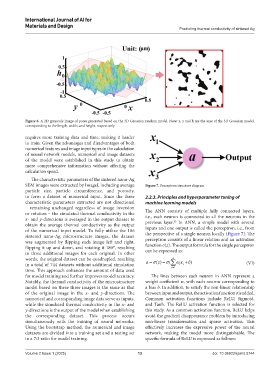
            Figure 6. A 2D grayscale image of pores generated based on the 3D Gaussian random model. Note: x, y and h are the axes of the 3D Gaussian model,
            corresponding to the length, width, and height, respectively

            requires more  training  data  and  time,  making  it  harder
            to train. Given the advantages and disadvantages of both
            numerical features and image input types in the calculation
            of neural network models, numerical and image datasets
            of  the  model  were  established  in  this  study  to  obtain
            more comprehensive information without affecting the
            calculation speed.
              The characteristic parameters of the sintered nano-Ag
            SEM images were extracted by ImageJ, including average   Figure 7. Perceptron structure diagram
            particle size, particle circumference, and porosity,
            to form a dataset of numerical input. Since the three   2.2.3. Principles and hyperparameter tuning of
            characteristic  parameters  extracted  are  not  directional   machine learning models
            –  remaining  unchanged  regardless  of  image  inversion
            or rotation – the simulated thermal conductivity in the   The  ANN  consists  of  multiple  fully  connected  layers,
            x- and y-directions is averaged in the output dataset to   i.e., each neuron  is  connected  to all  the  neurons  in  the
                                                                           35
            obtain the average thermal conductivity as the output   previous layer.  In ANN, a simple model with several
            of the numerical input model. To fully utilize the 186   inputs and one output is called the perceptron, i.e., from
            sintered nano-Ag microstructure images, the dataset   the perspective of a single neuron locally (Figure 7). The
            was augmented by flipping each image left and right,   perceptron consists of a linear relation and an activation
            flipping it up and down, and rotating it 180°, resulting   function σ(z). The output formula for the single perceptron
            in three additional images for each original. In other   can be expressed as:
            words, the original dataset can be quadrupled, resulting   a σ =  ()z = σ  (  n  ω  x +  ) b
            in a total of 744 datasets without additional simulation      ∑ 1  i  i                       (VI)
                                                                          i=
            time. This approach enhances the amount of data used
            for model training and further improves model accuracy.   The lines between each neuron in ANN represent a
            Notably, the thermal conductivity of the microstructure   weight coefficient w, with each neuron corresponding to
            model based on these three images is the same as that   a bias b. In addition, to satisfy the non-linear relationship
            of the original image in the  x-  and  y-directions. The   between input and output, the activation function σ is added.
            numerical and corresponding image data serve as inputs,   Common activation functions include ReLU, Sigmoid,
            while the simulated thermal conductivity in the x- and   and Tanh. The ReLU activation function is selected for
            y-directions is the output of the model when establishing   this study. As a common activation function, ReLU helps
            the corresponding dataset. This process occurs     avoid the gradient disappearance problem by introducing
            simultaneously with the training of neural networks.   non-linear transformation and sparse activation. This
            Using the bootstrap method, the numerical and image   effectively increases the expressive power of the neural
            datasets are divided into a training set and a testing set   network,  making  the  model  more  distinguishable. The
            in a 7:3 ratio for model training.                 specific formula of ReLU is expressed as follows:


            Volume 2 Issue 1 (2025)                         13                             doi: 10.36922/ijamd.5744

