


Page 22 - IJAMD-2-1
P. 22
International Journal of AI for
            Materials and Design
                                                                             Predicting thermal conductivity of sintered Ag


                         A                                   B


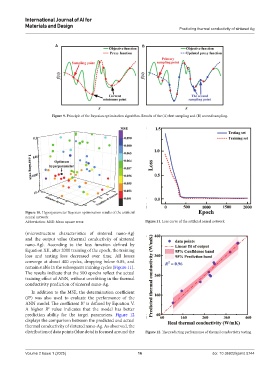
                       Figure 9. Principle of the Bayesian optimization algorithm. Results of the (A) first sampling and (B) second sampling.


            Figure 10. Hyperparameter Bayesian optimization results of the artificial
            neural network
            Abbreviation: MSE: Mean square error.              Figure 11. Loss curve of the artificial neural network

            (microstructure characteristics of sintered nano-Ag)
            and the output value (thermal conductivity of sintered
            nano-Ag). According to the loss function defined by
            Equation XII, after 2000 training of the epoch, the training
            loss and testing loss decreased over time. All losses
            converge at about 400  cycles, dropping below 0.05, and
            remain stable in the subsequent training cycles (Figure 11).
            The results indicate that the 500 epochs reflect the actual
            training effect of ANN, without overfitting in the thermal
            conductivity prediction of sintered nano-Ag.
              In addition to the MSE, the determination coefficient
            (R ) was also used to evaluate the performance of the
              2
            ANN model. The coefficient R  is defined by Equation V.
                                     2
            A  higher  R  value indicates that the model has better
                      2
            prediction ability for the target parameters.  Figure  12
            displays the comparison between the predicted and actual
            thermal conductivity of sintered nano-Ag. As observed, the
            distribution of data points (blue dots) is focused around the   Figure 12. The predicting performance of thermal conductivity testing


            Volume 2 Issue 1 (2025)                         16                             doi: 10.36922/ijamd.5744

