


Page 13 - IJAMD-2-2
P. 13
International Journal of AI for
            Materials and Design                                                  AI-driven material development for AM


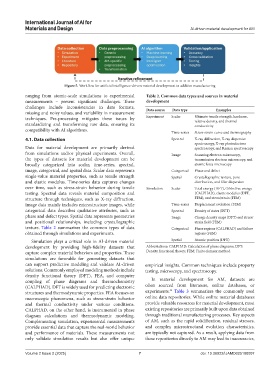
                            Figure 5. Workflow for artificial intelligence-driven material development in additive manufacturing

            ranging from atomic-scale simulations to experimental   Table 2. Common data types and sources in material
            measurements – present significant challenges. These   development
            challenges include inconsistencies in data formats,   Data source  Data type     Examples
            missing and noisy values, and variability in measurement
            techniques. Pre-processing mitigates these issues by   Experiment  Scalar  Ultimate tensile strength, hardness,
                                                                                    relative density, and thermal
            standardizing  and  transforming  raw  data,  ensuring  its             conductivity
            compatibility with AI algorithms.                             Time-series  Stress-strain curve and thermography
            4.1. Data collection                                          Spectral  X-ray diffraction, X-ray dispersive
                                                                                    spectroscopy, X-ray photoelectron
            Data  for material  development  are primarily  derived                 spectroscopy, and Raman spectroscopy
            from simulations and/or physical experiments. Overall,        Image     Scanning electron microscopy,
            the types of datasets for material development can be                   transmission electron microscopy, and
            broadly  categorized  into  scalar,  time-series,  spectral,            atomic force microscopy
            image, categorical, and spatial data. Scalar data represents   Categorical  Phase and defect
            single-value material properties, such as tensile strength    Spatial   Crystallographic texture, pore
            and elastic modulus. Time-series data captures changes                  distribution, and filler dispersion
            over time, such as stress-strain behavior during tensile   Simulation  Scalar  Total energy (DFT), Gibbs free energy
            testing. Spectral data reveals material composition and                 (CALPHAD), elastic modulus (DFT,
            structure through techniques, such as X-ray diffraction.                FEM), and stress/strain (FEM)
            Image data mainly includes microstructure images, while       Time-series  Displacement evolution (FEM)
            categorical data describes qualitative attributes, such as    Spectral  Density of states (DFT)
            phase and defect types. Spatial data represents geometries    Image     Charge density maps (DFT) and stress/
            and positional relationships, including crystallographic                strain field (FEM)
            texture.  Table  2 summarizes the common types of data        Categorical  Phase regions (CALPHAD) and failure
            obtained through simulations and experiments.                           regions (FEM)
              Simulation plays a critical role in AI-driven material      Spatial   Atomic position (DFT)
            development by providing high-fidelity datasets that   Abbreviations: CALPHAD: Calculation of phase diagrams; DFT:
            capture complex material behaviors and properties. These   Density functional theory; FEM: Finite element method.
            simulations are favorable for generating datasets that
            can support predictive modeling and validate AI-driven   empirical insights. Common techniques include property
            solutions. Commonly employed modeling methods include   testing, microscopy, and spectroscopy.
            density functional theory (DFT), FEA, and computer
            coupling of phase diagrams and thermochemistry       In material development for AM, datasets are
            (CALPHAD). DFT is widely used for predicting electronic   often  sourced  from  literature,  online  databases,  or
                                                                         43
            structures and thermodynamic properties. FEA focuses on   experiments.   Table  3 summarizes the commonly used
            macroscopic  phenomena,  such  as  stress-strain  behavior   online data repositories. While online material databases
            and thermal conductivity under various conditions.   provide valuable resources for material development, most
            CALPHAD, on the other hand, is instrumental in phase   existing repositories are primarily built upon data obtained
            diagram calculations and thermodynamic modeling.   through traditional manufacturing processes. Key aspects
            Complementing simulation, experimental measurements   of AM, such as the rapid solidification, residual stresses,
            provide essential data that capture the real-world behavior   and complex microstructural evolution characteristics,
            and performance  of materials.  These  measurements  not   are typically not captured. As a result, applying data from
            only validate simulation results but also offer unique   these repositories directly to AM may lead to inaccuracies,


            Volume 2 Issue 2 (2025)                         7                         doi: 10.36922/IJAMD025100007

