


Page 18 - IJAMD-2-2
P. 18
International Journal of AI for
            Materials and Design                                                  AI-driven material development for AM


            Table 4. Summary of AI applications for metal materials for AM
            AM           Material     Optimization   AI method          Target            Model     References
            process                      type                                           performance
            DED    Fe–Ni–Ti–Al        Design    RF              Composition optimization  R2=0.998  Tan et al. 58
                                                                                      MAE=0.292
            PBF    SS316L             Performance  Adaptive Neuro-Fuzzy  Fatigue life prediction  RMS=14.66%  Zhang et al. 59
                                                Inference System
                                                (ANFIS)
            PBF    Zr52.5Cu17.9Ni14.6Al10Ti  Performance  HGP   Materials characteristics   RMSE=2.58%  Chernyavsky
                                                                prediction                         et al. 60
            PBF    AlSi10Mg           Performance  GPR          Tensile property optimization   -  He et al. 61
                                                                (YS and elongation)
            PBF    AlSi10Mg           Performance  GPR          Density variations and   -         Liu et al. 62
                                                                microstructural characteristics
                                                                prediction
            PBF    Ti-6Al-4V          Performance  MML          Fatigue strength design  -         Awd et al. 63
            PBF    Ti-6Al-4V          Performance  ANN          Tensile property optimization   R2: YS=0.9887,   Maleki et al. 64
                                                                (YS, UTS, and elongation)  UTS=0.9921,
                                                                                      elongation=0.9917
            PBF    Ti-6Al-4V          Performance  RSM+GA       Energy absorption optimization  R2=0.9431  Meng et al. 65
            DED    Ti–Mn alloy        Performance  GPR          YS and modulus optimization  MAPE: YS=6.26%,  Gong et al. 66
                                                                                      E=2.02%
            Abbreviations: ANN: Artificial neural networks; DED: Directed energy deposition; E: Elastic modulus; GA: Genetic algorithms; GPR: Gaussian process
            regression; HGP: Heteroscedastic Gaussian process; MAE: Mean absolute error; MML: Mechanistic machine learning; PBF: Powder bed fusion;
            RF: Random forest; RMS: Root mean square; RMSE: Root mean square error; RSM: Response surface methodology; UTS; Ultimate tensile strength;
            YS: Yield strength; AI: Artificial intelligence; AM: Additive manufacturing.

                         A                    B                              C


                         F                       E                         D


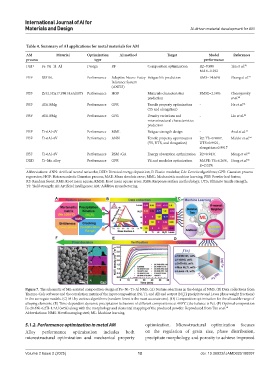
            Figure 7. The schematic of ML-assisted composition design of Fe–Ni–Ti–Al NMS. (A) Feature selections in the design of NMS. (B) Data collections from
            Thermo-Calc software and the correlation matrix of the input composition (Ni, Ti, and Al) and output (Ni Ti precipitate and Laves phase weight fractions)
                                                                               3
            in the surrogate models. (C) ML by various algorithms (random forest is the most accurate one). (D) Composition optimization for the allowable range of
            alloying elements. (E) Time-dependent dynamic precipitation behaviors of different compositions at 490°C (the balance is Fe). (F) Optimal composition
            Fe-20.8Ni-6.2Ti-1.7Al (wt%) along with the morphology and elemental mapping of the produced powder. Reproduced from Tan et al. 58
            Abbreviations: NMS: Novel maraging steel; ML: Machine learning.


            5.1.2. Performance optimization in metal AM        optimization.  Microstructural  optimization  focuses
            Alloy  performance  optimization  includes  both   on the regulation of grain size, phase distribution,
            microstructural optimization and mechanical property   precipitate morphology, and porosity to achieve improved


            Volume 2 Issue 2 (2025)                         12                        doi: 10.36922/IJAMD025100007

