


Page 23 - IJAMD-2-2
P. 23
International Journal of AI for
            Materials and Design                                                  AI-driven material development for AM


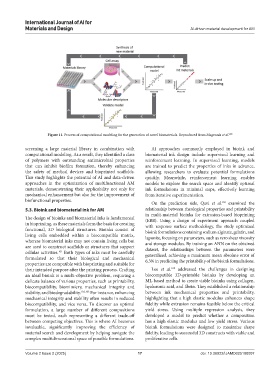
                     Figure 11. Process of computational modeling for the generation of novel biomaterials. Reproduced from Magennis et al. 100


            screening a large material library in combination with   AI approaches commonly employed in bioink and
            computational modeling. As a result, they identified a class   biomaterial ink design include supervised learning and
            of polymers with outstanding antimicrobial properties   reinforcement learning. In supervised learning, models
            that can inhibit biofilm formation, thereby enhancing   are trained to predict the properties of inks in advance,
            the safety of medical devices and bioprinted scaffolds.   allowing researchers to evaluate potential formulations
            This study highlights the potential of AI and data-driven   quickly. Meanwhile, reinforcement learning enables
            approaches in the optimization of multifunctional AM   models to explore the search space and identify optimal
            materials, demonstrating their applicability not only for   ink formulations in minimal steps, effectively learning
            mechanical enhancement but also for the improvement of   from iterative experimentation.
            biofunctional properties.
                                                                 On the prediction side, Qavi  et al.  examined the
                                                                                               104
            5.3. Bioink and biomaterial ink for AM             relationship between rheological properties and printability
                                                               in multi-material bioinks for extrusion-based bioprinting
            The design of bioinks and biomaterial inks is fundamental   (EBB). Using a design of experiment approach coupled
            in bioprinting, as these materials form the basis for creating   with response surface methodology, the study optimized
            functional, 3D biological structures. Bioinks consist of   bioink formulations containing sodium alginate, gelatin, and
            living  cells embedded  within a  biocompatible matrix,   laponite, focusing on parameters, such as zero shear viscosity
            whereas biomaterial inks may not contain living cells but   and storage modulus. By training an ANN on the obtained
            are used to construct scaffolds or structures that support   dataset, the relationships between the parameters were
            cellular activities.  Both types of inks must be carefully   generalized, achieving a maximum mean absolute error of
                          101
            formulated so that their biological and mechanical   6.3% in predicting the printability of the bioink formulations.
            properties are compatible with bioprinting and suitable for
            their intended purpose after the printing process. Crafting   Lee  et al.  addressed the challenges in designing
                                                                          105
            an ideal bioink is a multi-objective problem, requiring a   biocompatible 3D-printable bioinks by developing an
            delicate balance of various properties, such as printability,   ML-based method to create viable bioinks using collagen,
            biocompatibility, biomimicry, mechanical integrity and   hyaluronic acid, and fibrin. They established a relationship
            stability, and biodegradability. 102,103  For instance, enhancing   between ink mechanical properties and printability,
            mechanical integrity and stability often results in reduced   highlighting that a high elastic modulus enhances shape
            biocompatibility, and vice versa. To discover an optimal   fidelity while extrusion remains feasible below the critical
            formulation, a large number of different compositions   yield stress. Using multiple regression analysis, they
            must be tested, each representing a different trade-off   developed a model to predict whether a composition
            between competing objectives. This is where AI becomes   has a high elastic modulus and low yield stress. Various
            invaluable, significantly improving the efficiency of   bioink formulations were designed to maximize shape
            material search and development by helping navigate the   fidelity, leading to successful 3D constructs with viable and
            complex multidimensional space of possible formulations.  proliferative cells.


            Volume 2 Issue 2 (2025)                         17                        doi: 10.36922/IJAMD025100007

